


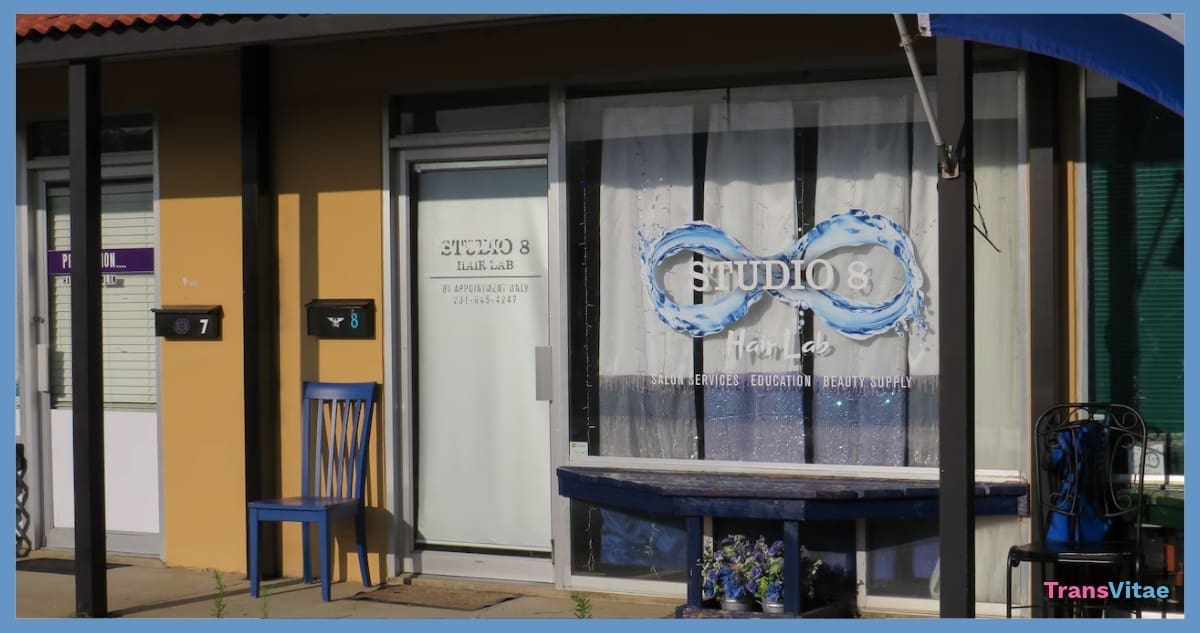
The Michigan Civil Rights Commission has ruled that a Traverse City hair salon violated the state’s anti-discrimination law by refusing service to transgender and gender nonconforming clients, marking one of the first major enforcement decisions under Michigan’s expanded LGBTQ+ civil rights protections.
The ruling stems from social media posts made by the owner of Studio 8 Hair Lab in 2023 announcing that transgender and nonbinary individuals would not be welcome at the salon. One widely shared post instructed people who did not identify as male or female to “seek services at a local pet groomer,” drawing national criticism and prompting complaints to the Michigan Department of Civil Rights.
After a lengthy investigation and administrative proceedings, the Michigan Civil Rights Commission concluded that the salon violated the Elliott-Larsen Civil Rights Act by discriminating against customers based on gender identity and expression. The commission also found the business engaged in unlawful retaliation connected to the case.
As part of its order, the salon owner must pay the state’s legal costs, complete civil rights training, and remove the discriminatory Facebook posts that led to the complaint. The commission’s decision reinforces that businesses open to the public cannot deny services based on a customer’s protected characteristics under Michigan law.
A Landmark Test of Michigan’s LGBTQ+ Protections
The case has been closely watched since it began because it represents one of the first significant tests of Michigan’s updated civil rights protections for LGBTQ+ residents.
Michigan strengthened the Elliott-Larsen Civil Rights Act in 2023 by explicitly adding sexual orientation and gender identity to the list of protected characteristics. Those protections built upon a 2022 Michigan Supreme Court ruling that interpreted discrimination based on sexual orientation and gender identity as unlawful under the existing statute.
Civil rights advocates argued throughout the case that public accommodations such as salons, restaurants, hotels, and retail businesses cannot selectively refuse service to protected groups simply because of the owner’s personal beliefs.
The commission’s ruling appears to affirm that position, signaling that publicly advertising discriminatory business practices can violate state law even before a customer is turned away.
Free Speech Versus Public Accommodation
Throughout the dispute, the salon owner maintained that her social media posts were protected by the First Amendment and reflected her personal beliefs. However, the Michigan Department of Civil Rights argued that publicly announcing an intention to refuse service to protected groups constitutes unlawful discrimination under state law.
The commission ultimately sided with the department, finding that businesses serving the general public remain subject to Michigan’s civil rights laws regardless of statements made on social media.
The decision is expected to serve as an important precedent for future discrimination complaints involving LGBTQ+ customers across Michigan.
The Bottom Line
For transgender Michiganders, the ruling offers a clear reminder that the state’s civil rights protections extend beyond employment and housing to include businesses that offer services to the public.
While legal battles over transgender rights continue in courts and legislatures across the country, Michigan’s Civil Rights Commission has sent a strong message that public accommodations cannot exclude customers because of their gender identity.
Whether the salon owner pursues additional legal appeals remains to be seen, but the commission’s decision establishes one of the clearest examples yet of Michigan enforcing its modern LGBTQ+ nondiscrimination protections.
