


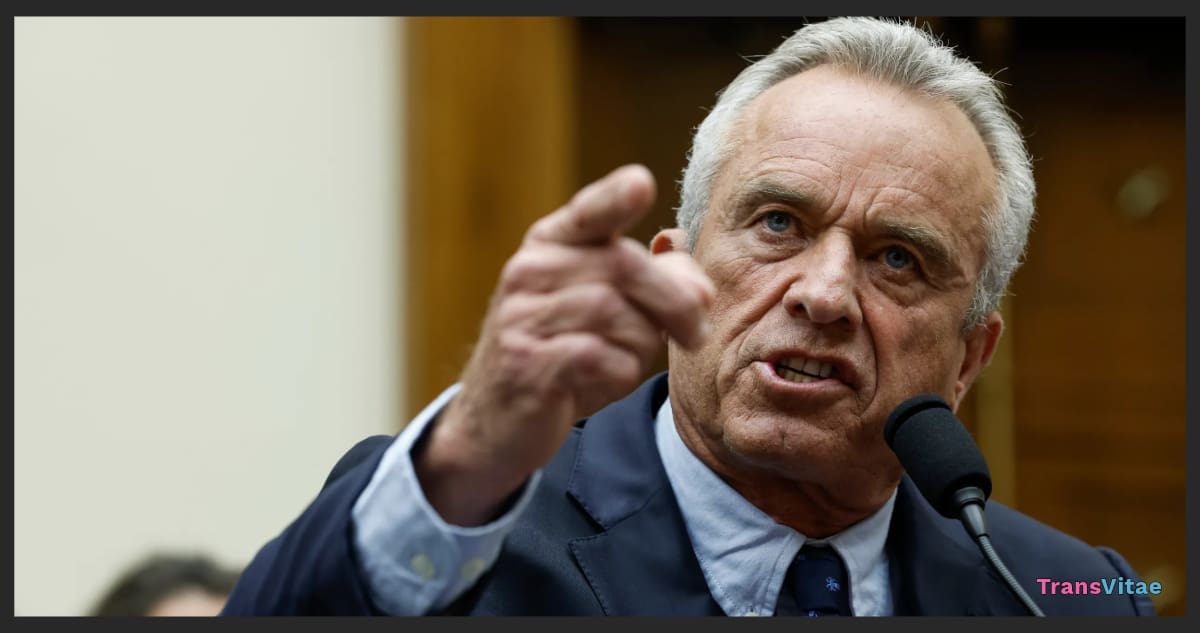
A federal judge has dealt another significant setback to the Trump administration’s campaign against gender-affirming healthcare, ruling that Health and Human Services Secretary Robert F. Kennedy Jr. acted unlawfully when he attempted to pressure hospitals into ending care for transgender youth.
The decision, issued by U.S. District Judge Mustafa T. Kasubhai in Oregon, blocks enforcement of Kennedy’s December 2025 declaration that claimed gender-affirming care for minors fell below accepted medical standards and threatened hospitals with the loss of Medicare and Medicaid funding if they continued providing such care. The lawsuit was brought by 19 states and the District of Columbia, which argued that the directive exceeded the federal government’s legal authority.
Judge Kasubhai agreed, finding that Kennedy’s declaration was not only procedurally flawed but unsupported by the evidence required to justify such sweeping federal action. According to the ruling, the Department of Health and Human Services failed to follow the legal rulemaking process and relied on conclusions that conflicted with the prevailing medical consensus.
The ruling is particularly significant because many hospitals had already begun scaling back or suspending gender-affirming care for transgender minors after Kennedy’s declaration, fearing they could lose billions of dollars in federal reimbursement. Several major healthcare systems canceled appointments, paused surgeries, or restricted hormone therapy despite no court ruling requiring them to do so.
Judge Kasubhai acknowledged the difficult position hospitals found themselves in, caught between following established medical standards and protecting their financial viability. However, he concluded that federal officials cannot use informal declarations and funding threats to force policy changes that Congress has not authorized.
Medical organizations have consistently maintained that evidence-based gender-affirming care remains the recommended treatment for appropriately evaluated transgender adolescents experiencing gender dysphoria. Groups including the American Academy of Pediatrics, the American Medical Association, and the Endocrine Society continue to support individualized care guided by medical professionals rather than political directives.
For transgender families, the ruling represents an important legal victory, though uncertainty remains. Some hospitals may continue limiting services while legal challenges proceed, and the Trump administration is expected to appeal the decision.
The case also reinforces a growing judicial trend. Federal courts have repeatedly scrutinized administration efforts to reshape healthcare policy through executive declarations rather than formal regulatory procedures. Judges have increasingly required agencies to demonstrate that policy changes are grounded in established law, supported by evidence, and developed through the rulemaking process mandated under federal law.
While the legal battle over gender-affirming care is far from over, Kasubhai’s decision sends a clear message that federal agencies cannot sidestep administrative law or disregard established medical evidence when attempting to restrict healthcare access. For thousands of transgender youth and their families, it offers renewed hope that medical decisions will remain where many believe they belong: between patients, their families, and their healthcare providers.
