


Feeling exhausted, weak, foggy, or weirdly winded after walking up a flight of stairs can send anyone down the supplement aisle looking for an answer. Iron is an easy suspect. After all, fatigue is one of the classic symptoms associated with iron-deficiency anemia.
Then comes the seemingly obvious solution: buy an iron supplement. Not so fast.
Iron deficiency and anemia are related, but they are not interchangeable. You can be iron deficient without being anemic. You can also be anemic while having perfectly adequate iron stores. And for transgender people taking gender-affirming hormones, interpreting a blood test can come with an additional complication: hormone therapy can change hemoglobin and hematocrit enough that the reference range attached to your lab report may not always tell the whole story.
That makes “just take iron” less of a solution and more of a guess.
And when we’re talking about something your body can accumulate in excessive amounts, guessing isn’t particularly great healthcare.
First, What Does Iron Actually Do?
Iron is a mineral your body needs for several functions, but its celebrity role is helping make hemoglobin.
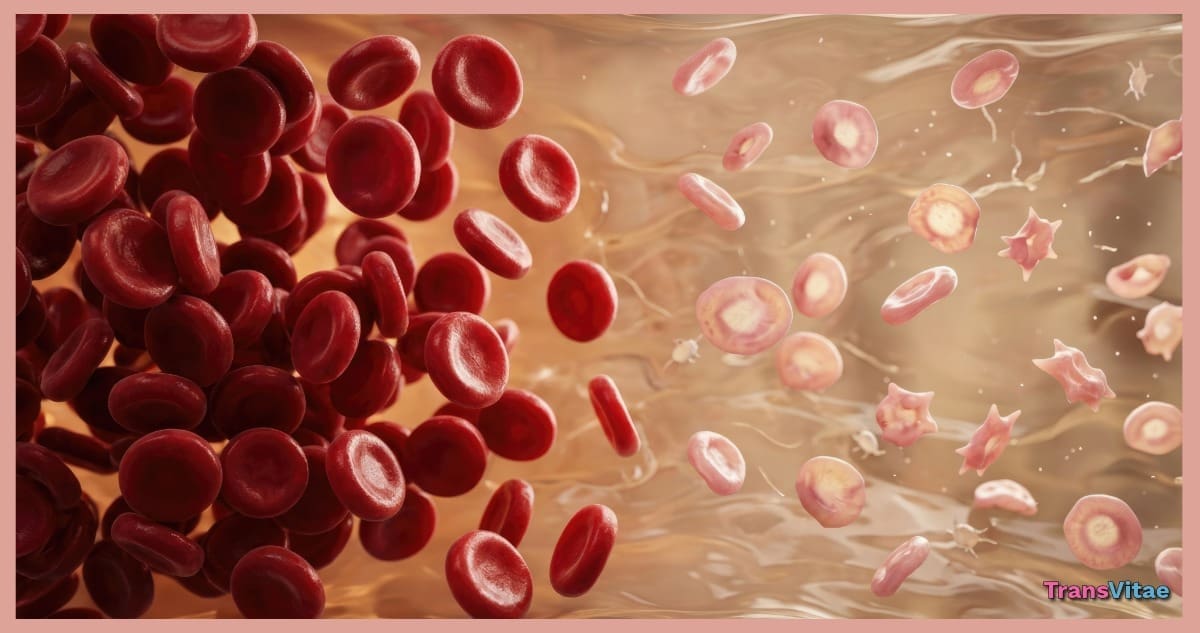
Hemoglobin is the protein inside red blood cells that carries oxygen from your lungs to tissues throughout your body. If your body doesn’t have enough usable iron, eventually it may struggle to manufacture adequate hemoglobin.
That can reduce the blood’s ability to transport oxygen.
The result can include fatigue, weakness, poor exercise tolerance, difficulty concentrating, and feeling unusually wiped out by activities that normally wouldn’t bother you. But iron deficiency doesn’t necessarily begin with anemia.
Your body maintains iron reserves, primarily stored in a protein called ferritin. Think of ferritin as your body’s iron pantry. You can start emptying the shelves while dinner is still being served normally.
That’s why someone can have normal hemoglobin while their iron stores are already running low.
According to the National Institutes of Health Office of Dietary Supplements, iron deficiency progresses through stages. Iron stores can become depleted first. As deficiency progresses, iron available for red blood cell production falls. Only later may hemoglobin fall enough to produce iron-deficiency anemia.
In other words: Low iron does not automatically mean anemia, and anemia does not automatically mean low iron.
That distinction matters.
Hemoglobin and Ferritin Aren’t the Same Test
A complete blood count, or CBC, usually includes hemoglobin, hematocrit, and several measurements describing your red blood cells. Hemoglobin tells us something about the blood’s oxygen-carrying machinery. Ferritin tells us more about stored iron.
Doctors may also order additional iron studies, including serum iron, total iron-binding capacity, and transferrin saturation, depending on the situation.
Ferritin is particularly useful because it can reveal depleted iron stores before hemoglobin necessarily becomes abnormal. NIH notes that ferritin below about 30 micrograms per liter can suggest iron deficiency, although interpretation isn’t always that simple.
There’s another plot twist: ferritin can rise during inflammation.
Someone experiencing infection, inflammatory disease, or another inflammatory process may therefore have a ferritin result that appears reassuring even when iron availability is complicated. That’s one reason clinicians interpret ferritin alongside other laboratory results, symptoms, and medical history instead of treating one number like a Magic 8 Ball.
Then What Exactly Is Anemia?
Anemia broadly means that the blood doesn’t have an adequate concentration of hemoglobin or enough healthy red blood cells to carry oxygen normally.
Iron deficiency is one possible cause. It is not the only one.
Anemia can be associated with vitamin B12 or folate deficiency, chronic disease, kidney problems, inflammation, blood loss, gastrointestinal disorders, inherited blood conditions, and other medical issues.
So if your hemoglobin comes back low, swallowing increasingly heroic quantities of iron without establishing iron deficiency may completely miss the reason you’re anemic.
The better question isn’t simply, “How do I raise my iron?” It’s, “Why are these numbers low?”
That one extra word, “why,” can change the entire conversation.
Trans Bodies Add Another Wrinkle
This is where transgender healthcare deserves more nuance than checking whichever “M” or “F” happens to be sitting in a laboratory database.
Hemoglobin and hematocrit are influenced by sex hormones.
Research involving transgender adults receiving stable hormone therapy has found that hematologic values shift substantially with gender-affirming hormone therapy. In one study of healthy transgender adults taking hormones for at least 12 months, hematology measurements among people receiving testosterone were not clinically different from cisgender male ranges, while those receiving estrogen were not clinically different from cisgender female ranges.
More recent clinical laboratory guidance similarly recommends that hemoglobin and hematocrit generally be interpreted using reference ranges aligned with affirmed gender for people established on gender-affirming hormone therapy.
Changes can happen relatively quickly.
A clinical review reports that hematocrit can move into the affirmed-gender range within roughly three months of beginning hormone therapy. Research on feminizing hormone therapy has likewise documented decreases in hemoglobin and hematocrit, while testosterone generally pushes them upward.
That matters enormously when talking about anemia.
A transgender woman taking estrogen and testosterone suppression may have hemoglobin lower than her pre-transition baseline because her physiology has changed. A result flagged as “low” against an inappropriate male reference interval might not represent anemia at all.
Conversely, a transgender man taking testosterone can experience increases in hemoglobin and hematocrit. That creates a different clinical conversation, including watching for values that become excessively high.
The takeaway isn’t that every transgender person should personally choose a different reference range from the dropdown menu.
It’s that gender-affirming hormone therapy matters when interpreting bloodwork.
Your clinician needs to know what you’re taking, how long you’ve been taking it, and what anatomy or physiological factors are relevant.
Menstruation Matters More Than Gender Labels
Iron requirements are heavily influenced by blood loss. Someone who menstruates can lose iron every month regardless of whether that person is a woman, man, or nonbinary.
That means a transgender man who still menstruates may have significantly different iron considerations from a transgender man who no longer does.
Likewise, a transgender woman does not suddenly develop menstrual iron losses because her hemoglobin shifts toward a typical female reference range on estrogen.
This is where applying generic “men’s vitamins” and “women’s vitamins” to transgender bodies can become ridiculous remarkably quickly.
Bodies don’t read the label on the bottle.
For iron studies specifically, clinical guidance recommends considering menstruation and pregnancy when selecting appropriate reference ranges rather than relying solely on gender.
Why Is the Iron Low?
Suppose testing actually confirms iron deficiency. Great. We found something. We’re still only halfway through the mystery.
Iron deficiency can develop because someone isn’t consuming enough iron, isn’t absorbing enough of what they consume, or is losing iron faster than it can be replaced.
Diet can certainly contribute. People who eat little or no meat, poultry or seafood may need to pay closer attention because plant-based iron is generally less readily absorbed.
But persistent iron deficiency can also be associated with blood loss, frequent blood donation, and gastrointestinal conditions that interfere with absorption. Heavy menstrual bleeding is another major risk factor.
This is precisely why repeatedly treating unexplained iron deficiency with supplements can become problematic. The supplement might improve the number while the reason the number became abnormal remains undiscovered.
If there’s ongoing blood loss somewhere, wouldn’t you rather know?
Getting Iron From Food
Iron comes in two major dietary forms: heme iron and nonheme iron.
Heme iron is found in animal foods and is generally absorbed more efficiently. Sources include meat, poultry, and seafood.
Nonheme iron appears in plant foods and fortified products. Beans, lentils, spinach, peas, nuts, fortified cereals and breads can contribute meaningful iron to the diet.
People eating vegetarian or vegan diets absolutely can meet their iron needs, but absorption becomes more important.
Vitamin C can improve absorption of nonheme iron, which means combinations like beans with peppers, lentils with tomatoes, or iron-fortified cereal with berries aren’t just tasty nutritional propaganda. There’s chemistry happening there.
The NIH also notes that calcium can interfere with iron absorption, which is one reason calcium and iron supplements may be taken at different times when supplementation is needed.
About That Bottle of Iron at Walgreens
Iron supplements aren’t inherently bad. For someone with documented iron deficiency, supplementation can be an important part of treatment.
The problem is treating iron like a harmless wellness supplement.
Iron supplements come in several forms, including ferrous sulfate, ferrous gluconate, and other iron salts. More importantly, the number that matters is the amount of elemental iron, which can differ considerably between products and formulations.
And more isn’t automatically better.
Higher doses can cause gastrointestinal side effects, including nausea, abdominal discomfort, and constipation. Iron can also interact with medications and other supplements. Excessive iron can be dangerous, and accidental iron overdose is particularly hazardous for young children.
So that giant number screaming from the front of the bottle isn’t a high score you’re supposed to beat. Treatment should ideally match the actual problem.
Fatigue Deserves an Investigation, Not a Guess
This is especially important because fatigue is spectacularly nonspecific. Low iron can make you tired.
So can inadequate sleep, insufficient calories, dehydration, thyroid disorders, vitamin deficiencies, infections, depression, medication effects, and a laundry list of other conditions.
Gender-affirming hormone therapy can change physiology, but it shouldn’t become the universal explanation for every symptom a transgender person experiences.
“My hormones must be doing this” can be just as misleading as a doctor blaming every complaint on transition.
If you’re persistently exhausted, unusually short of breath, weak, dizzy, experiencing heart palpitations, or noticing a significant decline in exercise tolerance, that’s worth discussing with a healthcare professional rather than conducting nutritional roulette in aisle seven.
A CBC may be part of that conversation. Ferritin and additional iron studies may be appropriate depending on the results and your history.
And if iron deficiency is confirmed, the next question deserves to be asked:
Why?
The Bottom Line
Blood tests are incredibly useful. They’re also snapshots that require context.
For transgender people, that context includes hormone therapy, menstruation status, anatomy, medications, nutrition, previous laboratory results, and individual medical history.
A hemoglobin result shouldn’t be interpreted in isolation. Neither should ferritin. And neither should your exhaustion. Sometimes the answer really is iron deficiency, and sometimes iron supplementation really is exactly what the body needs.
But finding that answer through appropriate testing is a lot smarter than assuming every tired person needs a bottle of ferrous sulfate.
Your body isn’t asking you to win a supplement-shopping contest. It’s giving you information. The goal is figuring out what it’s trying to say.
Medical Disclaimer: This article is for informational and educational purposes only and is not a substitute for professional medical advice, diagnosis, or treatment. Iron deficiency, anemia, fatigue, and abnormal bloodwork can have many causes. Do not start, stop, or change iron supplements, medications, or gender-affirming hormone therapy based solely on this information. Always discuss symptoms, laboratory results, and supplementation with a qualified healthcare professional who understands your individual medical history.
