


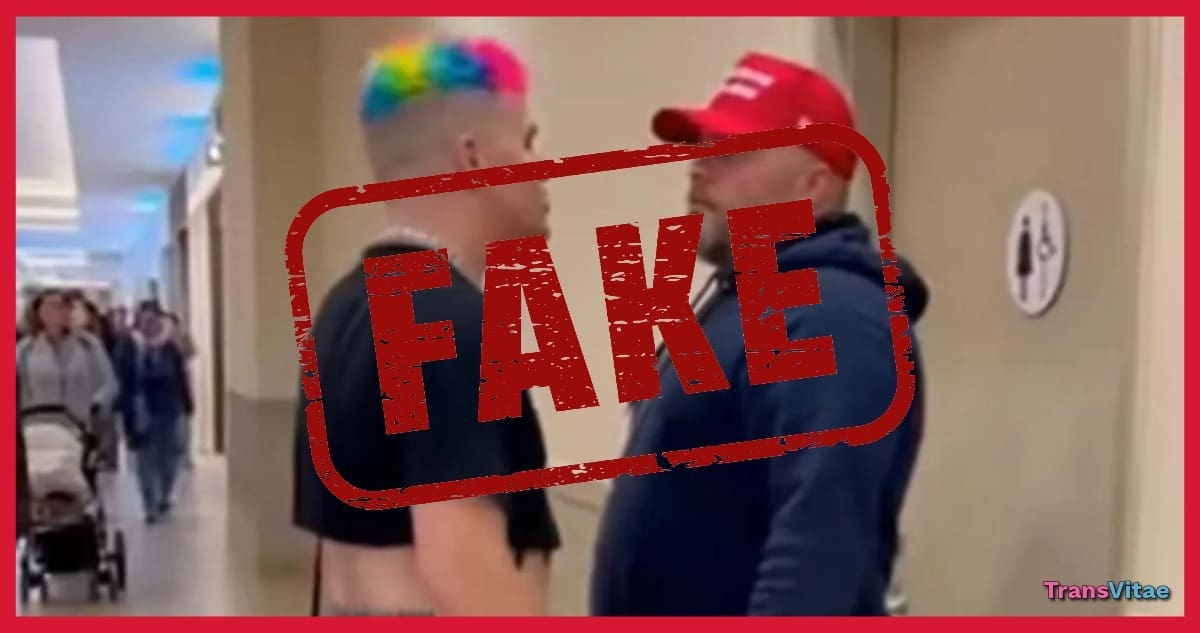
A widely shared image on social media depicting a man wearing a red “Make America Great Again” hat appearing to block a transgender person from entering a women’s restroom is not authentic, according to a fact check published by Snopes.com on February 16, 2026.
The image circulated across multiple social media platforms, including Facebook and Twitter, where users framed it as evidence of anti-transgender harassment. However, Snopes determined that the photo was generated using artificial intelligence and does not document a real-life confrontation.
According to the fact check, the image originated from an AI prompt shared online and was not taken at an actual public restroom. Snopes reported that there is no evidence the depicted incident occurred and classified the claim as false.
The viral post suggested that the image showed discrimination tied to ongoing political debates about restroom access for transgender people. Bathroom access policies have remained a flashpoint issue across the United States, with state legislatures continuing to introduce and debate restrictions affecting transgender individuals. While documented cases of harassment and discrimination do occur, Snopes confirmed this specific image does not represent a verified event.
The fact check was written by Snopes reporter Jordan Liles, who noted that AI-generated images are increasingly being used to provoke emotional reactions and amplify political narratives. Advances in generative technology have made it easier to create realistic but fabricated visuals that can quickly spread before verification occurs.
Digital misinformation experts have warned that fabricated images can intensify political tensions, particularly on issues involving marginalized communities. When false visuals are widely shared, they can distort public understanding and undermine trust in legitimate reporting. They may also distract attention from real incidents that warrant scrutiny and accountability.
Social media platforms have introduced tools to identify or label AI-generated content, though enforcement standards vary. Users are encouraged to verify sensational claims through reputable fact-checking organizations before sharing. Outlets such as Snopes, FactCheck.org, and PolitiFact routinely review viral claims involving political and social issues.
The incident underscores broader concerns about media literacy in an era when artificial intelligence can produce convincing but entirely fictional content. As policy debates over transgender rights continue nationwide, experts emphasize the importance of verifying images and claims before drawing conclusions.
Snopes’ findings make clear that the viral restroom image is not evidence of a real confrontation but rather another example of how AI-generated content can shape online narratives without factual basis.
