


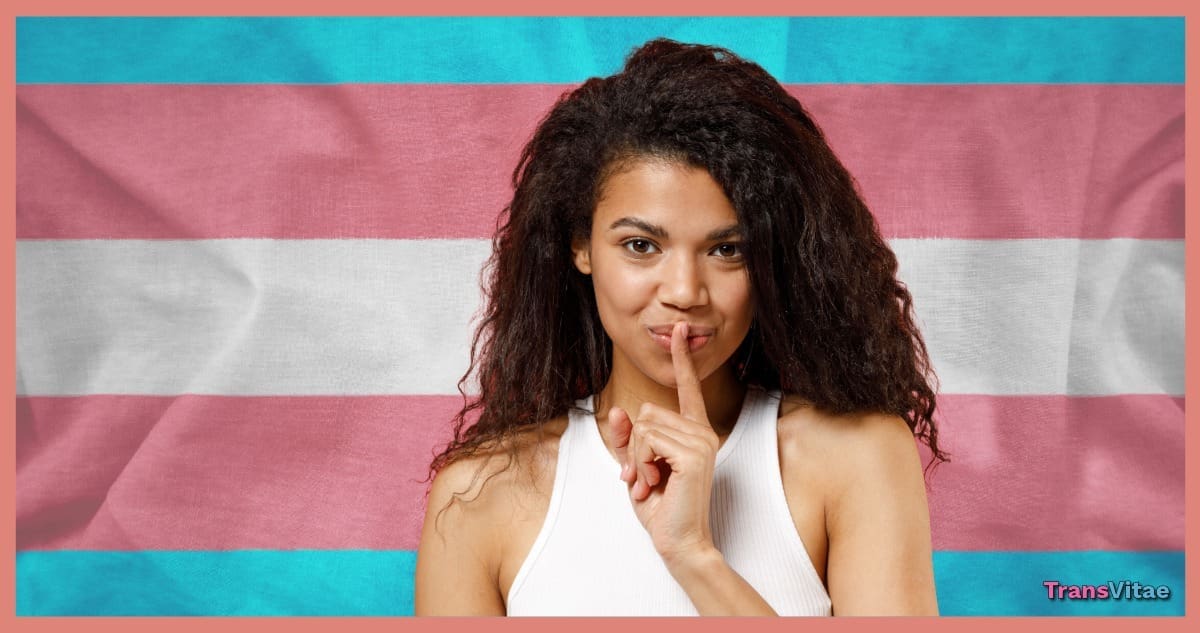
For years, opponents of transgender rights have framed anti-LGBTQ+ legislation as a debate about fairness, parental rights, or protecting children. But the growing wave of “Don’t Say Trans” style bills moving through legislatures across the United States reveals something deeper and far more dangerous: an effort to pressure transgender people back into silence.
Bills like H.R. 2616, recently passed by the House of Representatives, are often presented as narrow education policies. Supporters claim they simply increase parental involvement or create transparency in schools. But transgender advocates, mental health experts, educators, and civil liberties organizations say the broader impact reaches far beyond classrooms.
The message these laws send is simple: being openly transgender is something that should be hidden, discouraged, monitored, or disclosed against a person’s will.
That message affects everyone. Not just children. Not just schools. Everyone.
The Closet Never Really Disappeared
Many younger Americans grew up in a world where LGBTQ+ visibility seemed to be improving. Television shows featured openly queer characters. Corporations wrapped themselves in rainbow branding every June. Transgender celebrities appeared on magazine covers and streaming platforms. For a moment, it looked like the country was slowly moving toward broader acceptance.
But visibility is not the same thing as safety.
For older LGBTQ+ adults, especially transgender people, the current political moment feels painfully familiar. The pressure to hide identity, avoid public discussion, and stay quiet about existence itself echoes earlier decades when being openly queer could cost someone their job, housing, family, or physical safety.
That is why many advocates describe modern anti-trans legislation as an attempt to force people “back into the closet.”
Not necessarily through outright criminalization.
Through fear.
Through exhaustion.
Through social punishment.
When lawmakers argue that teachers should not acknowledge transgender students, when states ban books mentioning transgender lives, when public officials portray trans existence as dangerous or inappropriate for children to hear about, the effect is cumulative. It teaches society that transgender identity is something shameful.
And shame has always been one of the most effective tools for erasure.
Why Visibility Matters
Critics of transgender visibility often ask a question that sounds simple on the surface:
“Why does it need to be discussed at all?”
The answer is because visibility saves lives.
For decades, LGBTQ+ people grew up believing they were alone. Many had never knowingly met another queer person. Many never saw themselves represented positively anywhere in public life. That isolation created enormous mental health consequences.
When young people see others like themselves existing openly and safely, it changes what feels possible.
A transgender teenager seeing an openly trans teacher, journalist, athlete, or neighbor is not being “indoctrinated.” They are learning that survival is possible. That adulthood is possible. That happiness is possible.
Research from organizations like The Trevor Project has repeatedly shown that acceptance and affirming environments are linked to dramatically lower rates of depression and suicide attempts among LGBTQ+ youth.
The reverse is also true. Hostile environments increase risk.
When schools are forced to treat transgender identity like a taboo subject, students absorb that message quickly. Silence becomes policy. Teachers become afraid to answer questions. Support systems disappear. Students learn that authenticity can place them in danger.
The psychological impact of that environment cannot be separated from the legislation creating it.
The “Parental Rights” Framing
Many of these bills are carefully branded around parental rights. Politically, that framing is effective because most people support parental involvement in children’s lives.
But critics argue the language is often used to obscure what the legislation actually does.
In practice, many “parental rights” proposals require schools to disclose a student’s gender identity to parents even if the student fears abuse, homelessness, or rejection.
Supporters often dismiss those fears as exaggerated. Reality says otherwise.
According to data from The Trevor Project and homelessness advocacy organizations, LGBTQ+ youth are disproportionately represented among homeless minors in the United States, often after family rejection related to sexual orientation or gender identity.
For some transgender students, school may be the only place where they feel safe using their chosen name or pronouns.
Policies forcing disclosure remove that safety.
Even in supportive families, forced outing can permanently damage trust between students and educators. Young people become less likely to seek help, counseling, or mentorship when they believe any private conversation may be reported.
The result is not stronger families. It is fearful students learning to stay silent.
The Chilling Effect Is the Point
One of the most misunderstood aspects of these laws is how broadly their effects spread, even beyond what is explicitly written. Many anti-LGBTQ+ bills are intentionally vague. Terms like “gender ideology,” “age appropriate,” or “sexualized content” are often left undefined.
That ambiguity creates a chilling effect.
- Teachers avoid topics entirely to protect themselves.
- Libraries remove books preemptively.
- Schools cancel support groups.
- Medical providers grow cautious.
- Employers become nervous about diversity programs.
The fear spreads faster than the law itself. This is not accidental.
Historically, censorship efforts rarely begin with outright bans. They begin by creating enough legal uncertainty that institutions censor themselves voluntarily.
That dynamic is already visible across parts of the country.
Some educators now avoid displaying Pride symbols entirely. Others report uncertainty about whether acknowledging a transgender student could place their job at risk. LGBTQ+ support programs have quietly disappeared from some schools without formal bans ever being issued.
Silence becomes normalized because people become afraid of consequences.
Transgender Adults Are Also Being Targeted
Although many of these political fights focus on schools, the broader rhetoric increasingly targets transgender adults as well. State legislatures and federal officials have introduced policies affecting workplace protections, health care access, identification documents, military service, housing access, sports participation, and public accommodations.
The cumulative message is hard to ignore. Transgender existence itself is being framed as socially disruptive. That framing has real-world consequences.
Studies consistently show that public rhetoric influences social hostility. When political leaders repeatedly portray a marginalized group as dangerous, predatory, deceptive, or mentally unstable, harassment and violence often increase.
Transgender Americans already face disproportionately high rates of assault, discrimination, and housing insecurity. Black transgender women face especially severe levels of violence and economic instability.
Yet many current political campaigns treat transgender people less like citizens and more like ideological symbols in a cultural war. That dehumanization makes it easier for broader restrictions to gain public support.
“Just Don’t Talk About It” Is Not Neutral
One of the most common defenses of these laws is the claim that they are not anti-trans because transgender people are still technically allowed to exist.
Critics say that argument misses the point entirely. Silencing discussion about identity is itself a form of suppression. History offers countless examples. Telling women not to discuss sexism did not eliminate sexism. Telling racial minorities not to discuss discrimination did not create equality. Telling LGBTQ+ people not to discuss identity does not create neutrality.
It creates invisibility. And invisibility has consequences.
When people are erased from public conversation, misinformation fills the gap. Communities become easier to demonize because fewer people personally know anyone willing or able to live openly.
That isolation benefits political movements built around fear. Because it is much easier to attack a group society rarely sees.
The Mental Health Cost of Forced Silence
Living in the closet is not a harmless compromise. For many transgender people, hiding identity requires constant emotional monitoring. Every conversation becomes calculated. Clothing, posture, language, social media activity, friendships, and even facial expressions can become sources of anxiety.
The stress accumulates over time.
Mental health experts have long documented the psychological harm associated with identity suppression. Chronic concealment is linked to anxiety, depression, hypervigilance, social isolation, and suicidal ideation.
Many transgender adults describe finally coming out not as a political statement but as survival.
That is what makes current legislative trends so alarming for many in the community. These policies do not simply regulate institutions. They recreate conditions that many transgender people spent years struggling to escape.
The expectation that they should hide. The expectation that authenticity is inappropriate. The expectation that comfort for others matters more than their own existence.
The Broader Impact on Society
Even people who are not transgender should pay attention to where this rhetoric leads. Movements centered around censorship rarely stop with one group.
Efforts to ban LGBTQ+ discussions often expand into broader attacks on books, educators, academic freedom, diversity programs, and public expression. Libraries, universities, journalists, and healthcare providers increasingly face political pressure over what information they can share.
The normalization of government-directed silence affects everyone. Once lawmakers establish that certain identities or viewpoints are too controversial to discuss openly, the boundaries can continue expanding. That is why civil liberties organizations have repeatedly warned that anti-LGBTQ+ censorship laws create precedents extending far beyond gender identity alone.
The Bottom Line
Despite the political pressure, many transgender Americans say they will not return to silence. Not because visibility is easy. Because history has already shown what happens when fear wins.
Generations of LGBTQ+ people fought for the ability to exist openly without losing jobs, homes, healthcare, or safety. Many paid enormous personal costs to create the visibility younger generations experience today. That progress was never guaranteed to be permanent. And many advocates believe the current political climate proves exactly that.
The fight over “Don’t Say Trans” legislation is not simply about schools or pronouns. It is about whether transgender people are allowed to participate openly in public life without being treated as inappropriate, dangerous, or socially unacceptable.
At its core, this debate asks a fundamental question: Should transgender people be visible members of society, or should they be pressured into silence for the comfort of others?
For many transgender Americans, the answer is deeply personal. Because they already know what life in the closet feels like. And they have no intention of going back.
