


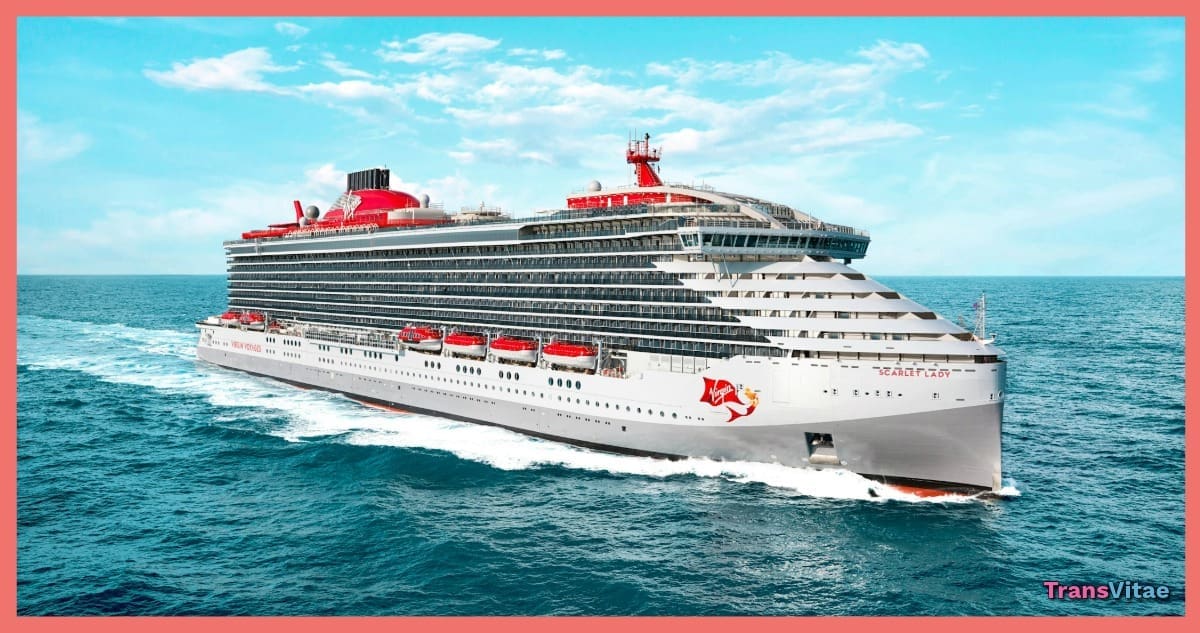
An LGBTQ+ cruise carrying nearly 2,000 passengers has been barred from docking in Turkey after local officials cited the country’s “moral values,” prompting criticism from organizers who say the decision is unprecedented in the company’s 36-year history.
The 10-day Mediterranean voyage, organized by Atlantis Events aboard Virgin Voyages’ Scarlet Lady, was scheduled to visit the Turkish ports of Kuşadası and Istanbul before continuing to Italy. Instead, passengers were informed just days before departure that both Turkish stops had been canceled and replaced with visits to Cairo, Egypt, and the Greek island of Crete.
Turkish officials said the ship had been chartered by groups “known for behaviors incompatible with the fabric of our society and our moral values.” Authorities in Aydın Province, where Kuşadası is located, reportedly stated there was “absolutely no possibility” of allowing the group to visit under those circumstances.
The cruise was expected to carry approximately 1,900 passengers, including around 1,100 travelers from the United States, with others arriving from Canada, the United Kingdom, Australia, and several other countries. While Atlantis Events markets many of its cruises primarily to gay men, the voyages are open to LGBTQ+ travelers and their allies.
Rich Campbell, president and CEO of Atlantis Events, called the decision both surprising and deeply troubling.
“It is the first time in 36 years that we’ve been actively told we may not berth somewhere because of who we are,” Campbell told CNN, emphasizing that the cruise was intended as a tourism experience rather than a political event. He noted that passengers planned to visit local attractions, restaurants, and businesses while respecting local customs.
The decision comes amid years of increasing restrictions on LGBTQ+ visibility in Turkey under President Recep Tayyip Erdoğan’s government. Pride marches have been effectively banned in Istanbul since 2015, and government officials have frequently framed LGBTQ+ identities as incompatible with traditional family values.
The controversy also drew attention from performer Patti LuPone, who is scheduled to entertain guests aboard the cruise. She publicly criticized Turkey’s decision, saying she was “furious” that travelers were being denied entry because of their identities while confirming she would continue with the voyage’s revised itinerary.
For LGBTQ+ travelers, the incident serves as another reminder that legal recognition and social acceptance vary dramatically around the world. While many destinations actively court LGBTQ+ tourism, others continue to impose restrictions or adopt policies that can affect travelers based solely on their identity or the nature of their trip.
Although the passengers will still complete their Mediterranean vacation, organizers say the incident represents something larger than a simple itinerary change. It marks a rare example of an entire cruise being denied entry because of the identity of its guests, raising new concerns about the future of LGBTQ+ travel in regions where political attitudes toward the community continue to harden.
