


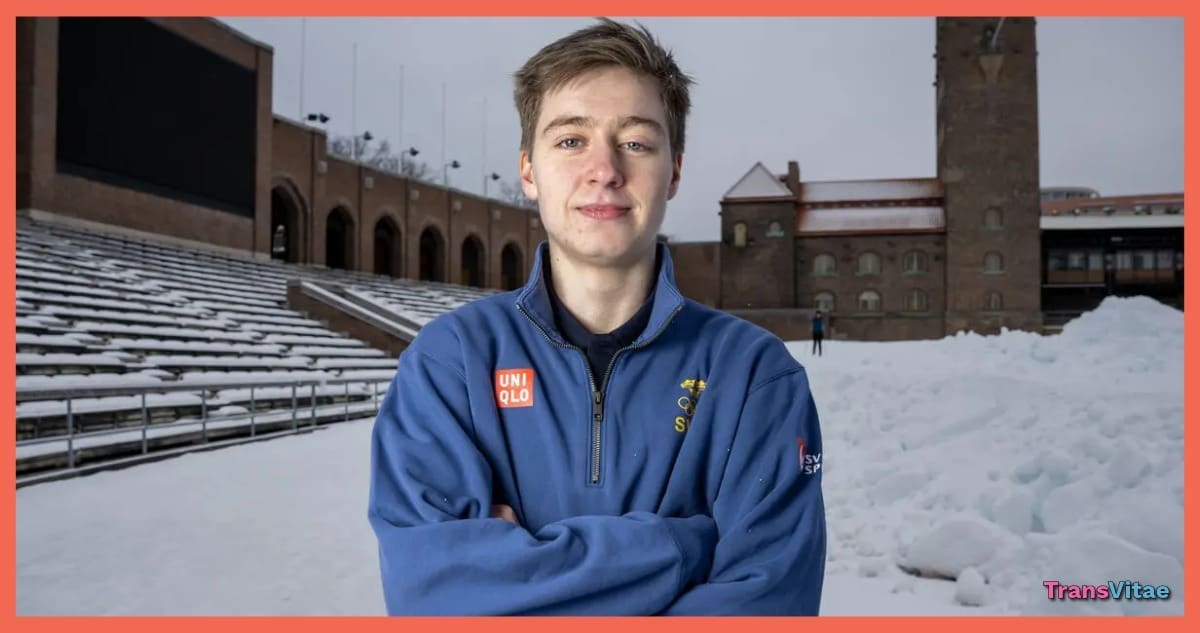
Swedish freestyle skier Elis Lundholm is set to make history at the 2026 Winter Olympics, becoming the first openly transgender athlete to compete in a Winter Olympic Games.
Lundholm, a moguls skier representing Sweden, is expected to compete at the Milan Cortina Games after years of competing at the elite international level. His participation marks a milestone moment for transgender visibility in winter sports, which have historically lagged behind summer sports in representation.
According to reporting from LGBTQ Nation, Lundholm publicly came out as transgender several years ago and has continued competing under international eligibility rules set by the International Ski and Snowboard Federation and the International Olympic Committee. Those rules allow transgender men who are not taking testosterone or who meet specified requirements to compete in women’s events. Lundholm has stated that his focus remains on his performance and love of the sport rather than on political debate surrounding transgender athletes.
In an interview cited by Yahoo Canada, Lundholm acknowledged the significance of his Olympic qualification while emphasizing that he does not see himself as a symbol or spokesperson. He has repeatedly said that his goal is to ski at the highest level possible and to be judged by his results on the course. Still, advocates note that his visibility alone carries weight at a time when transgender athletes are increasingly targeted by exclusionary policies and rhetoric.
Lundholm’s Olympic debut comes amid record LGBTQ representation at the 2026 Winter Games. A recent report identified at least 47 openly LGBTQ athletes expected to compete in Milan and Cortina. That figure includes gay, lesbian, bisexual, and queer athletes across sports such as figure skating, ice hockey, skiing, and snowboarding. While Lundholm is the only openly transgender athlete currently confirmed, the broader presence of LGBTQ competitors reflects a steady increase in visibility compared to previous Winter Olympics.
Outsports’ annual Team LGBTQ tracking project highlights how representation continues to grow even as political and cultural backlash intensifies in many countries. Several athletes competing in Milan have spoken publicly about the importance of visibility for younger LGBTQ people who rarely see themselves reflected in elite winter sports.
For transgender athletes and fans watching around the world, Lundholm’s appearance on the Olympic stage represents a rare moment of affirmation. His qualification stands as proof that transgender people belong in elite sport and that excellence and identity are not mutually exclusive.
As the Milan Cortina Games approach, Lundholm’s presence will be closely watched, not only for his athletic performance but also for what it represents in an increasingly polarized global conversation around transgender inclusion in sports.
