


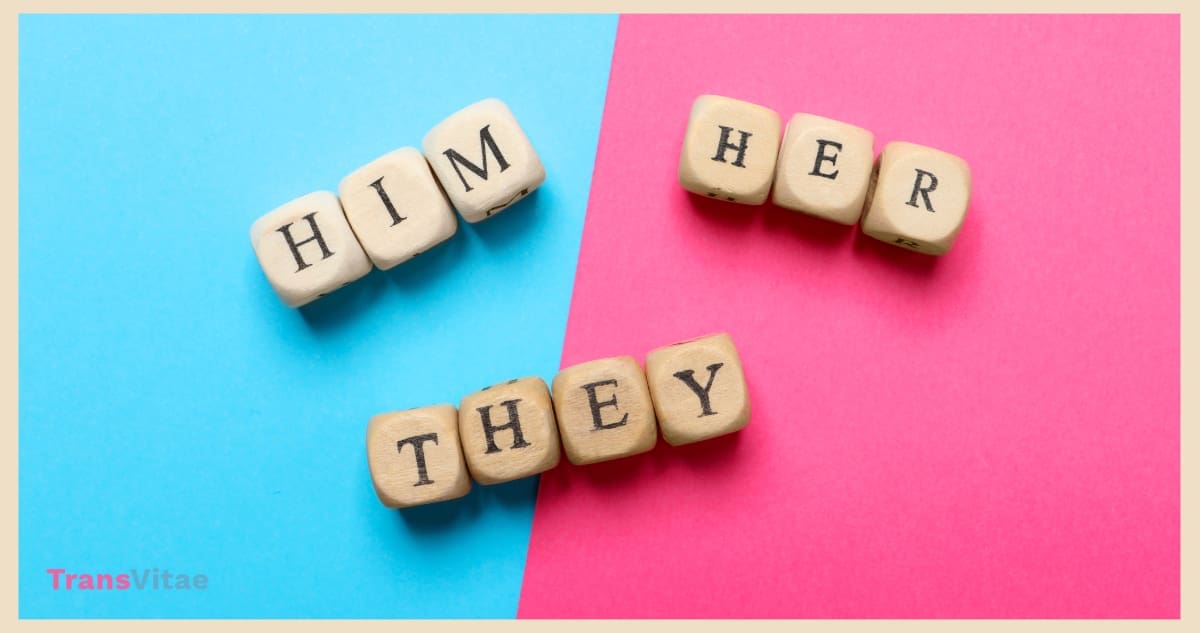
Every year, on the third Wednesday in October, International Pronouns Day reminds people of something that really shouldn’t require an awareness campaign: other people get to tell you how they want to be addressed. This year, that day falls on October 21, and judging by the continued outrage over pronouns in email signatures, social media bios, and everyday introductions, some people are still struggling with a concept most kindergarteners can grasp.
Let’s get something straight. Nobody is asking you to solve a quantum physics equation. Nobody is demanding that you memorize the complete works of Shakespeare. Someone is simply telling you that they use she/her, he/him, or they/them pronouns.
And somehow, for a certain segment of the population, this has become an existential crisis.
The same people who insist that transgender individuals are too sensitive about language can become remarkably emotional when they encounter three words in someone’s LinkedIn profile. They’ll complain about snowflakes, political correctness, and compelled speech, sometimes in a 700-word social media meltdown about how they refuse to participate in something they supposedly don’t care about.
For people who pride themselves on being rational, that’s an impressive amount of emotional investment in a few syllables.
But International Pronouns Day isn’t really about winning arguments with people who are determined to be offended. It’s about understanding why pronouns matter, what intentional misgendering communicates, and why basic respect has become such a strangely controversial proposition.
Pronouns Were Never a Problem Until Transgender People Asked for Respect
Pronouns are ordinary parts of language. We use them constantly, usually without giving them a second thought.
When someone introduces their husband, nobody demands a birth certificate before referring to him as “he.” When a coworker mentions that their daughter received a promotion, nobody launches an investigation into her chromosomes before using “she.”
We accept how people identify themselves in countless everyday interactions. We use nicknames, professional titles, married names, and preferred first names without demanding biological evidence or a notarized explanation.
Yet when a transgender woman asks to be called “she,” suddenly some people discover an overwhelming commitment to linguistic purity.
Funny how that works.
The English language has never been the rigid, unchanging institution these self-appointed grammar guardians imagine. Singular “they” has existed for centuries, and major style guides recognize its use for individuals who identify with that pronoun. Language evolves because people evolve, communication changes, and society develops new ways to describe familiar experiences.
You don’t have to understand every aspect of someone’s gender identity to address them respectfully. Most people don’t understand the technical details of their dentist’s profession, either, but they still manage to call her “Doctor” without declaring that civilization is collapsing.
The Great Pronouns-in-Bio Meltdown
Few things reveal the absurdity of the pronoun controversy quite like the reaction to people listing pronouns in their social media profiles.
Someone writes “she/her” beneath their name, and suddenly the comments section resembles a congressional hearing on the downfall of Western civilization.
Why are you announcing your pronouns? Why does everyone need to know? Why are you forcing your beliefs on me?
Here’s the fascinating part: a social media bio is literally a space where people provide information about themselves.
People list their hometowns, occupations, relationship statuses, hobbies, favorite sports teams, political opinions, and whether they’re hopelessly addicted to iced coffee. Apparently, all of that is acceptable. But include “they/them,” and somebody starts acting like they’ve been personally served with a federal subpoena.
Pronouns in bios serve a practical purpose. They tell other people how to refer to someone without requiring an awkward conversation or making assumptions based on appearance, names, or photographs.
For transgender and nonbinary people, that can reduce unnecessary misgendering. For cisgender people, including pronouns can help normalize the practice and make it less likely that sharing them automatically outs someone as transgender.
Participation should remain voluntary, of course. Nobody should have to disclose pronouns in a setting where doing so could compromise their privacy or safety.
But voluntarily including them in a profile isn’t an attack on anyone else’s freedom.
It’s information.
If seeing someone’s pronouns in a biography ruins your afternoon, the pronouns probably aren’t the underlying problem.
Accidental Misgendering and Deliberate Disrespect Are Different Things
People make mistakes. They mishear names, forget details, misunderstand situations, and occasionally use the wrong pronouns.
That happens, and most transgender people understand the difference between an honest mistake and deliberate hostility.
When someone accidentally misgenders another person, the appropriate response is remarkably simple: correct yourself, apologize briefly if necessary, and move on.
No dramatic confession is required. No elaborate explanation about how difficult pronouns are to remember. No ten-minute speech about how you grew up in a different generation.
Just correct the mistake.
Intentional misgendering is something else entirely.
When someone knows a person’s pronouns and deliberately refuses to use them, the mistake explanation no longer applies. The behavior becomes a conscious decision to disregard how that individual identifies.
Sometimes it’s done to humiliate. Sometimes it’s an attempt to provoke an emotional reaction. Sometimes it’s presented as a principled political statement.
Whatever the motivation, deliberate misgendering communicates that the speaker believes their personal opinion about another person’s identity should take precedence over ordinary courtesy.
And let’s not pretend this behavior is always some courageous act of philosophical resistance.
There’s nothing particularly brave about deliberately calling someone something they have repeatedly asked you not to call them. People learn this lesson on elementary school playgrounds.
Being an adult should make it easier, not harder.
Respect Is Not the Same as Agreement
One of the most persistent arguments against using transgender people’s pronouns is that doing so supposedly requires someone to affirm a belief they don’t personally hold.
But everyday courtesy doesn’t work that way.
You can address someone by their chosen name without endorsing every decision they’ve made. You can call someone by a professional title without agreeing with their political opinions. You can treat a neighbor respectfully without sharing their religion.
Respectful communication is not a loyalty oath.
People are free to hold personal, religious, and philosophical beliefs about gender. Those beliefs can be discussed, questioned, and debated.
What doesn’t follow is the idea that those beliefs automatically justify treating another person with deliberate contempt. There’s also an important distinction between discussing free speech protections and pretending speech has no social consequences.
The First Amendment generally restricts government punishment of protected expression. It doesn’t guarantee that coworkers, employers, friends, or strangers must applaud every intentionally insulting remark.
Workplaces and schools also operate under different legal obligations, and whether particular conduct constitutes unlawful harassment depends on the circumstances and applicable law.
Not every rude comment is illegal. But not every legally protected comment is admirable, either.
Freedom of speech includes the freedom to say something unnecessarily cruel. It doesn’t make cruelty a virtue.
Why Pronouns Actually Matter
For transgender people, pronouns can carry emotional significance that extends well beyond grammar.
Being consistently addressed in ways that reflect one’s gender identity can reinforce a sense of belonging, particularly in environments where transgender people regularly encounter rejection or hostility.
Research has linked gender-affirming experiences, including the use of chosen names, with better mental health outcomes among transgender youth. A 2018 study published in the Journal of Adolescent Health found that chosen-name use across more social contexts was associated with lower depressive symptoms and reduced suicidal ideation and behavior.
That study examined chosen names rather than pronouns specifically, and its observational findings should not be treated as proof that any single form of affirmation independently prevents mental health problems.
Nevertheless, the broader lesson is important: how people are treated in everyday social environments can matter.
For someone who has spent years being told that their identity is invalid, hearing the correct pronouns from a friend, coworker, teacher, or family member can be meaningful.
Conversely, repeated intentional misgendering can communicate rejection, especially when it comes from people who know exactly what they’re doing.
This doesn’t mean transgender people are incapable of handling disagreement. It means that persistent disrespect, particularly when repeated across workplaces, families, and public spaces, can take a psychological toll.
And no, acknowledging that reality isn’t evidence of weakness.
The People Who Complain About Pronouns Have Pronouns Too
Here’s an amusing detail that frequently gets lost in the outrage: everyone uses pronouns. The guy declaring “I don’t do pronouns” just used one in that very sentence.
“I” is a pronoun. So are “you,” “we,” “they,” “he,” and “she.”
Of course, most people making that complaint aren’t literally opposed to the grammatical category. They’re objecting to particular uses of pronouns associated with transgender and nonbinary identities.
That’s an important distinction because it exposes what the argument is actually about.
Nobody is campaigning to eliminate pronouns from English. The controversy is about whose identities deserve recognition and who gets to decide how another person should be addressed.
The debate becomes even more revealing when people who insist pronouns are meaningless become offended after someone uses the wrong ones for them.
Suddenly, being correctly identified matters quite a bit. Imagine that.
International Pronouns Day Isn’t Asking for a Miracle
International Pronouns Day was established in 2018 to make respecting, sharing, and educating about personal pronouns commonplace.
Its purpose isn’t to force everyone into a particular worldview. It’s to encourage communication that doesn’t unnecessarily exclude or demean people because of their gender identities.
That goal shouldn’t be revolutionary.
You don’t have to understand every gender identity. You don’t have to include pronouns in your own biography. You don’t have to turn every introduction into a seminar about gender.
You can simply listen when someone tells you how they want to be addressed.
And if you make a mistake, correct it.
For those who deliberately misgender transgender people because they believe doing so makes a political statement, there’s something worth considering: the person you’re trying to provoke may have already dealt with far more difficult challenges than your refusal to use a three-letter word.
They may have navigated family rejection, discrimination, medical barriers, or the difficult process of coming out.
Your comment probably isn’t the devastating intellectual victory you imagine.
It’s just another example of someone choosing hostility when courtesy would have required almost no effort.
The Bottom Line
International Pronouns Day is ultimately about something much larger than pronouns. It’s about whether we believe other people deserve basic dignity even when their experiences differ from our own.
Transgender people aren’t asking strangers to surrender their personal beliefs. They’re asking to participate in ordinary life without having their identities turned into constant arguments.
And people who list pronouns in their bios aren’t launching an ideological offensive. They’re making communication easier.
The truly remarkable thing about this controversy isn’t that transgender people care about being addressed respectfully. It’s that some adults have turned refusing that courtesy into an entire personality.
So, happy International Pronouns Day.
To everyone who uses someone’s correct pronouns without turning it into a performance, thank you for demonstrating that basic manners are still alive and well.
And to those who are already furiously typing about how they’ll never participate in this supposed pronoun madness, congratulations.
You’ve found another opportunity to announce to the world that three little words have more power over your emotions than you’d ever care to admit.
For a group that loves accusing everyone else of being triggered, you certainly picked an interesting hill to have a meltdown on.
