


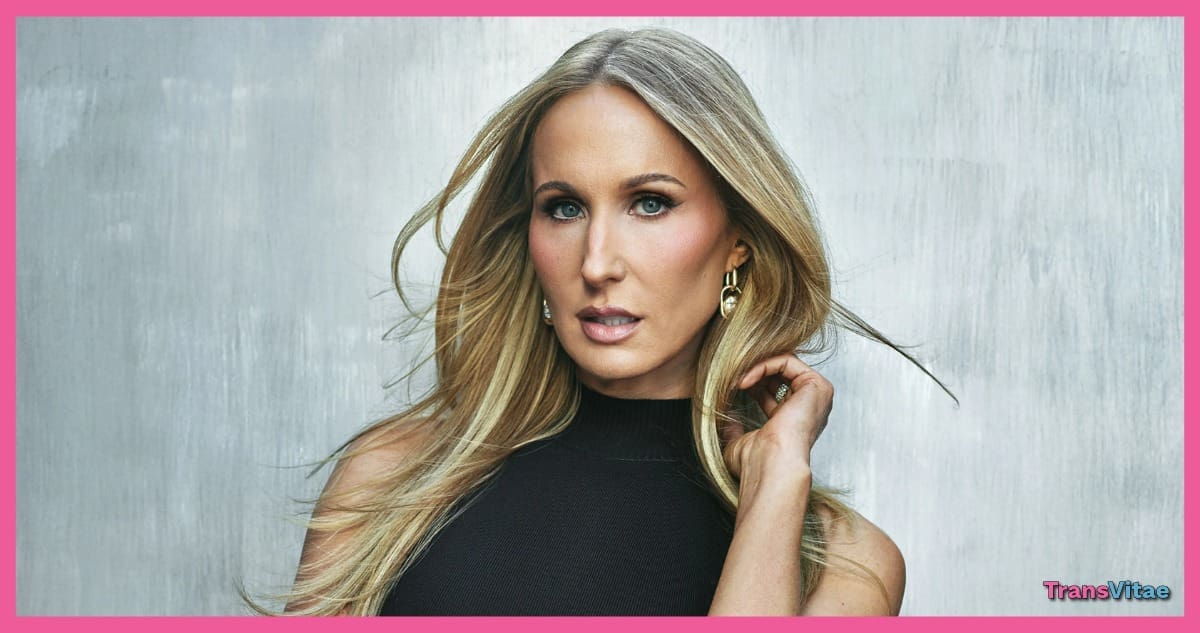
Comedian Nikki Glaser has apologized and promised to remove a joke from her stand-up routine after transgender influencer Briel Adams-Wheatley questioned why the comedian was making jokes about her body and genitals.
Adams-Wheatley, a 27-year-old content creator who was born without limbs, learned about the joke after a fan who attended Glaser’s recent show in Ridgefield, Washington, messaged her on Instagram. The fan said Glaser had spoken positively about Adams-Wheatley before making a joke connecting her disability to her transition.
According to the fan’s description, Glaser joked that Adams-Wheatley already had a difficult life without limbs but still “decided to transition,” before making a punchline suggesting that the way Adams-Wheatley moves had caused her to lose her penis.
Adams-Wheatley shared the exchange on Instagram Stories and tagged Glaser.
“Why are you making comments about what is or is not in my pants?” she asked. She also said she had purchased tickets to see Glaser in November but was reconsidering attending.
Glaser responds
Glaser contacted Adams-Wheatley directly after the posts appeared and apologized.
In messages subsequently shared by Adams-Wheatley, Glaser said the fan’s description did not fully represent the joke but acknowledged that hearing she had become material in someone else’s comedy set could still be upsetting.
Glaser also stressed that she did not intend the joke as an attack on transgender people, saying she hates anti-trans jokes and was disturbed by the possibility that her routine could contribute to anti-trans rhetoric.
“It’s a dumb joke and I will lose it immediately,” Glaser wrote, adding that she was sorry.
Glaser said her routine also repeatedly praised Adams-Wheatley and encouraged audience members to follow her online. Still, she acknowledged that those compliments did not erase Adams-Wheatley’s right to be offended.
The apology is notable in a comedy landscape where criticism of jokes involving transgender people can quickly turn into another round of arguments over “cancel culture” and free speech. Here, the exchange took a considerably simpler route: someone became the subject of a joke, said it crossed a personal boundary, and the comedian listened.
More than somebody else’s punchline
Adams-Wheatley has built a substantial online following by sharing makeup tutorials, lifestyle content, and glimpses into her everyday life. She has more than 1 million followers on Instagram and millions more on TikTok.
She has also spoken publicly about learning to deal with the cruelty that can accompany online visibility, particularly as both a disabled and transgender woman.
Comedy is supposed to push boundaries. Sometimes, however, the person standing on the other side of that boundary gets to say something too.
In this case, Adams-Wheatley did.
And Glaser, rather than turning the disagreement into a culture-war spectacle, appears to have listened.
