


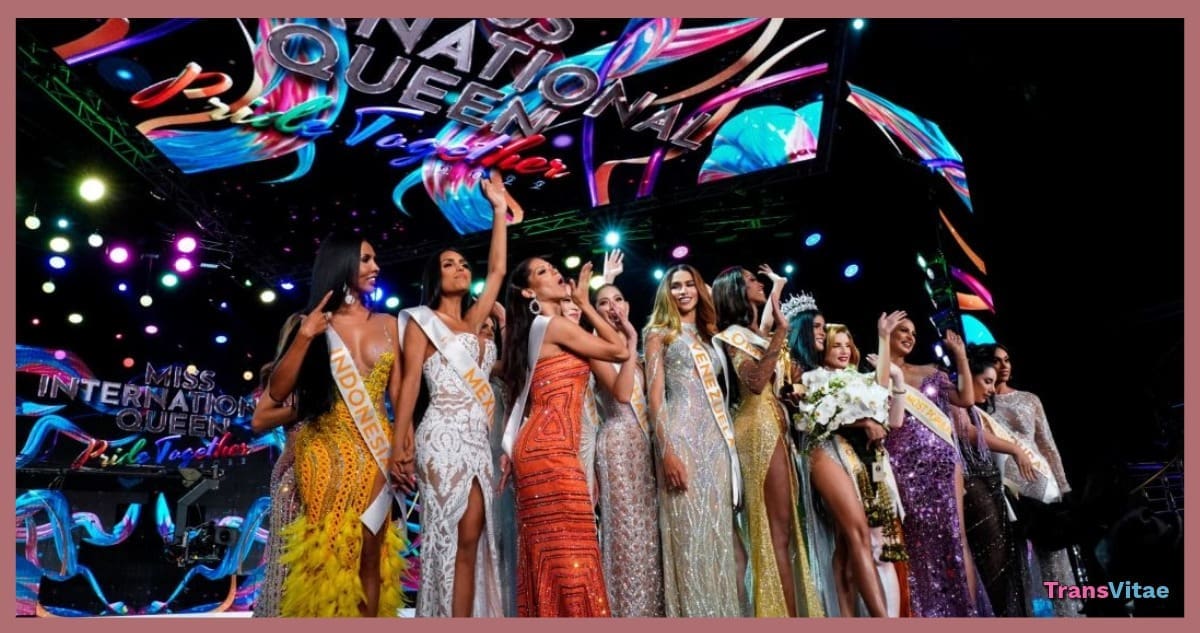
For many transgender women who transitioned later in life, pageants were never something we were allowed to enjoy openly.
They existed on the edges of our lives. Something glimpsed in passing on television, whispered about, or quietly admired from afar. Growing up, pageants were framed as something little boys were not supposed to watch. In the United States, they were rarely broadcast beyond the biggest national competitions, and even then, the message was clear. This world was not meant for us.
Still, the dreams were there.
We imagined the gowns. The stage lights. The moment of standing center stage, answering a question with poise and grace. For many of us, those dreams found an outlet through theater, performance, or drag. We learned how to hold an audience, how to move with intention, and how to command a stage, even when society insisted we do it in roles that never quite fit our inner pageant queen.
Coming out later in life often brings pageants back into focus. Friends begin competing. Local shows become accessible. Televised events no longer feel forbidden. Drag pageants, transgender pageants, and international competitions suddenly make sense in a way they never did before.
If you are new to pageant culture, especially as a transgender viewer, this guide is meant to help you watch with understanding rather than confusion, curiosity rather than judgment, and joy rather than distance.
Why Pageants Can Feel Emotionally Complicated
Pageants carry baggage, especially in American culture. They are often criticized as outdated, sexist, or harmful. Many feminist critiques argue that pageants reinforce narrow beauty standards and reduce women to their appearance. These conversations are valid and ongoing, and many pageant systems are still working to evolve.
At the same time, pageants can mean something very different to transgender women.
For those of us who were denied girlhood, pageants often symbolize a form of femininity that was once unreachable. They can represent visibility after years of invisibility, validation after long periods of denial, and performance as empowerment rather than spectacle.
Watching a pageant can stir joy, grief, longing, and pride all at once. Understanding how pageants function helps separate emotional response from structural reality. You are allowed to hold both.
Understanding the Flow of a Pageant
Most pageants follow a familiar rhythm, even when the categories vary. Knowing this rhythm makes watching feel less overwhelming and more intentional.
A pageant usually begins with an opening number. This is the first impression, where contestants appear together, often choreographed, to introduce themselves to judges and the audience. This segment is not about perfection. It is about presence. Confidence, posture, and awareness matter more than flawless movement.
From there, competitions move into individual segments. Evening gown is often the most anticipated. For many transgender viewers, this is the emotional centerpiece. Judges are not simply looking at the dress. They are watching how the contestant moves, how she holds herself, and how she connects elegance with authenticity. A strong gown presentation feels effortless even though it rarely is.
Interview segments are often where pageants are truly decided. Some interviews are private, held backstage with judges. Others take place on stage with a microphone and audience. This is where contestants reveal how they think, communicate, and handle pressure. Clear answers matter, but so does composure. A thoughtful pause can be more powerful than a rehearsed response.
Some pageants include swimsuit or fitness segments, though many have removed or reimagined them. When present, these segments are meant to highlight confidence and health rather than body type, though interpretations vary by organization.
Talent segments are common in local, drag, and transgender pageants. Singing, dancing, comedy, spoken word, and performance art all appear here. Transgender contestants often shine in talent because performance has long been a survival skill. We learned how to captivate before we were allowed to exist openly.
What Judges Are Actually Evaluating
It is easy to assume pageants are scored purely on beauty. In reality, judges are trained to evaluate a broader picture.
They are watching how a contestant presents herself consistently across segments. They are looking for authenticity, not just polish. A contestant who feels grounded and genuine often scores higher than one who appears technically perfect but emotionally distant.
Communication skills matter deeply. Judges notice whether answers are thoughtful, whether the contestant stays calm under pressure, and whether she connects emotionally without oversharing. Recovery matters too. A contestant who stumbles and regains composure demonstrates confidence.
Stage awareness is another subtle but important factor. Knowing where to stand, how to turn, when to pause, and how to acknowledge the audience without overperforming is part of pageant literacy. These skills often separate finalists from winners.
As a viewer, noticing these elements shifts pageants from passive entertainment to active appreciation.
Who Competes in These Pageants and Why It Matters as a Viewer
For viewers who are new to pageant culture, one of the biggest points of confusion is understanding who is actually on stage. Pageants are not one unified system. Each has its own rules, purpose, and definition of eligibility, and knowing this context can completely change how you watch and interpret what you see.
In the major international pageants like Miss Universe, Miss World, Miss International, Miss Earth, and Miss Grand International, contestants are women representing their countries. Almost all of them arrive through national competitions or official appointments. These women are not randomly selected. Many have years of experience, formal training, and media preparation before ever stepping onto a global stage. Their backgrounds range from students and professionals to activists, models, and community leaders.
Eligibility rules are set first at the national level, which means inclusion varies by country. Some nations allow transgender women to compete openly in national pageants that feed into international systems, while others still restrict eligibility. As a result, transgender representation exists on the global stage but is not evenly distributed. Understanding this helps explain why inclusion can feel inconsistent from year to year.
Transgender specific pageants operate under an entirely different framework. Competitions like Miss International Queen and Miss Tiffany’s Universe are designed exclusively for transgender women. Contestants are typically selected through regional or national transgender pageants and often bring strong advocacy, performance, and lived experience to the stage. These pageants prioritize authenticity, confidence, and representation over fitting into cisgender expectations of femininity.
Drag pageants are yet another world entirely. Systems such as Miss Continental, Miss Gay America, and Miss Gay USofA focus on performance, illusion, and theatrical gender expression. Competitors may be drag queens, transgender women, or gender-nonconforming performers, depending on the rules of the system. In drag pageantry, gender is a performance art rather than a statement of lived identity.
For transgender viewers, understanding who competes where helps separate comparison from appreciation. A contestant in a global pageant is navigating national politics, sponsorships, and cultural expectations. A contestant in a transgender pageant is often carrying the weight of visibility and representation. A drag pageant competitor is telling a story through spectacle and performance.
Knowing this context allows you to watch pageants with clarity rather than confusion. It reminds you that pageants measure success within a system, not womanhood itself. Watching then becomes less about asking whether you belong on that stage and more about recognizing the many different paths that bring someone there.
Why Evening Gown Resonates So Strongly
For many transgender women, evening gown is more than a category. It is a moment of arrival.
Judges assess elegance, movement, and cohesion. Does the gown match the contestant’s energy? Does her walk feel natural? Does she command stillness as confidently as motion?
Emotionally, this segment often hits deeper. It reflects a version of femininity many trans women once believed was unattainable. Watching someone step into that moment can feel affirming and heartbreaking at the same time.
There is no correct emotional response. Feeling joy does not invalidate grief, and feeling grief does not diminish celebration.
Listening to Interviews as a Transgender Viewer
When watching interview segments, it helps to listen beyond the surface of the answer.
Notice whether the contestant answers the question directly or deflects. Pay attention to tone, not just words. Does she sound present or overly rehearsed? Is there warmth, conviction, or vulnerability behind the response?
In transgender and drag pageants, interview questions often touch on advocacy, identity, resilience, and community impact. Judges are not expecting perfection. They are listening for sincerity and self-awareness.
As a viewer, you are allowed to value honesty over polish. Sometimes the most meaningful answers are the least scripted.
Drag Pageants and Transgender Pageants Are Not the Same
Drag pageants and transgender pageants often overlap in community, but they operate under different values.
Drag pageants emphasize performance, spectacle, and transformation. Talent is usually central, and exaggeration is often celebrated. Gender is theatrical, expressive, and intentionally stylized.
Transgender pageants tend to emphasize lived experience and authenticity. Interviews may focus on advocacy, personal growth, or representation. Presentation often mirrors mainstream pageantry while centering transgender identity.
Many trans women come through drag pageant spaces before transitioning. For some, drag remains a lifelong art form. For others, it becomes a stepping stone toward self-understanding. Neither path is more valid than the other.
Cultural Perspectives on Pageantry
If you have friends from Asian cultures, you may notice that pageant results are widely shared and celebrated. In many parts of Asia, pageants are viewed as pathways to opportunity, platforms for education, and sources of national pride.
Winners are often seen as ambassadors rather than stereotypes. This cultural context contrasts sharply with American skepticism and helps explain why international pageants continue to thrive globally.
For transgender viewers, this perspective can be refreshing. It reframes pageants as tools rather than traps.
Watching Without Internalized Judgment
If you grew up hearing that pageants were shallow or regressive, it is normal to feel conflicted watching them now.
You can appreciate pageants without endorsing every standard they promote. You can critique systems while celebrating contestants. You can enjoy beauty without reducing worth to appearance.
Pageants do not define womanhood. They reflect one expression of it.
Developing Your Own Viewer Lens
You do not need a scorecard to engage meaningfully.
As you watch, notice who feels authentic, who connects emotionally, who grows throughout the competition, and who represents their community with integrity. Your impressions may not align with the final results, and that is perfectly fine.
Pageants are subjective by design. Your perspective matters even when it differs.
Attending a Pageant in Person
Watching live is different from watching on a screen. The energy is louder, more emotional, and more communal. Audience members cheer, cry, and celebrate openly. Local pageants often feel deeply personal, especially when contestants are friends or community members.
If you are newly out, attending your first pageant can feel intimidating. Many transgender women are surprised by how welcomed they feel simply by being present. Even as an audience member, you belong in that space.
The Bottom Line
For transgender women who transitioned later in life, pageants often represent something quietly powerful. They remind us that the dreams we buried were never wrong. They were postponed.
You do not need to compete to belong. You do not need to agree with every tradition to find joy. Sometimes, watching another woman step into the light helps us finally see ourselves more clearly.
And sometimes, that is more than enough.
