


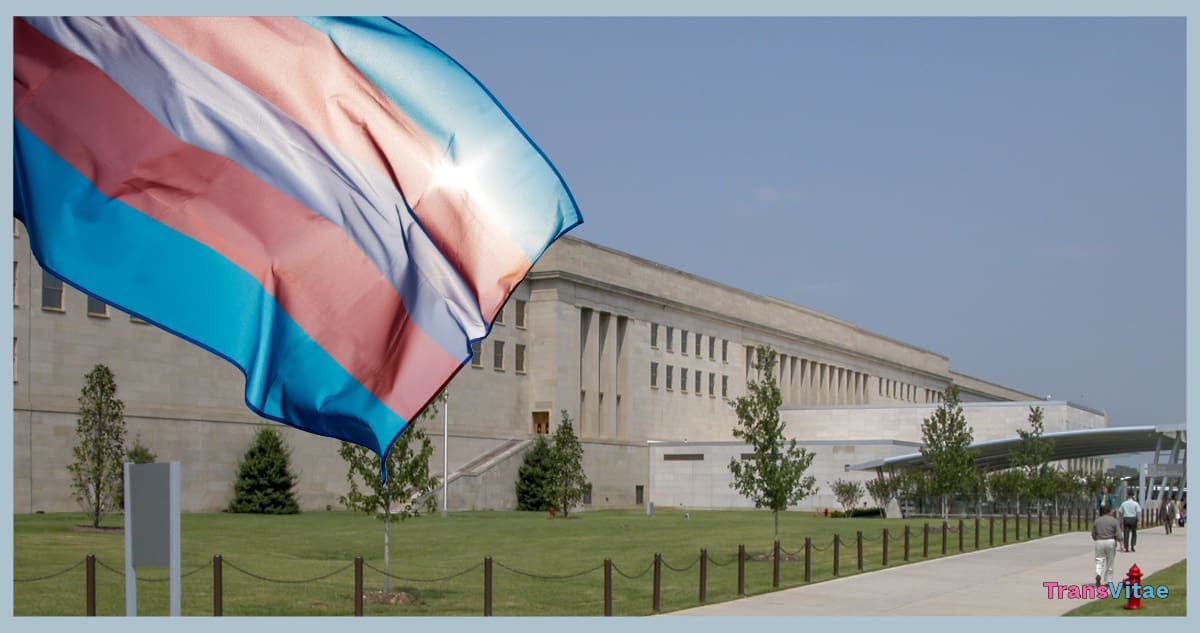
The Pentagon is reportedly searching military medical and personnel databases to identify transgender service members who remain in uniform, expanding the Trump administration’s effort to remove troops with a current or past diagnosis of gender dysphoria.
According to a Sept. 7 investigation by Federal News Network, military officials are using electronic health records to identify service members who may fall under the Pentagon’s transgender military ban. Commanders have begun receiving notices identifying personnel in their units and directing them to begin separation proceedings.
The effort appears to reach far beyond troops who are openly transgender.
Federal News Network reported that the Office of the Secretary of Defense has identified personnel whose electronic medical records show a current diagnosis, previous diagnosis, or symptoms associated with gender dysphoria. Sources believe officials are searching MHS Genesis, the Defense Department’s electronic health record system, along with personnel databases.
Those records can contain prescription histories, mental health treatment, civilian care covered by TRICARE and medical information dating from before a person entered military service.
That means troops who transitioned years ago, transitioned before joining the military, previously received treatment for gender dysphoria or never publicly transitioned may now be identified through their medical histories.
SPARTA Pride, an organization representing transgender service members, told Federal News Network that dozens of troops have reported what it described as an unprecedented use of military medical systems to identify personnel. Attorney Priya Rashid of the National Institute of Military Justice said she has recently been contacted by about 25 service members per week seeking help with involuntary separation proceedings.
The sweep may also be catching people who are not transgender. Rashid said some service members have reportedly been flagged because of procedures such as mastectomies or hysterectomies or because gender dysphoria diagnostic codes appeared in their records for other medical reasons.
Privacy concerns are becoming another flashpoint.
Military health information does not operate under exactly the same privacy rules as civilian medical care. Commanders can receive certain protected health information when necessary to determine fitness for duty. However, critics argue that systematically searching medical histories to identify otherwise qualified personnel for discharge turns a healthcare system into an enforcement mechanism.
The Pentagon’s own May 2025 guidance explicitly stated that reviewing medical records would be the “primary means” of identifying service members with a current or previous gender dysphoria diagnosis.
The Defense Department, Defense Health Agency, and individual military branches declined to answer Federal News Network’s questions, citing ongoing litigation.
The removals are proceeding while legal challenges to the transgender military ban remain unresolved. The administration has asked the Supreme Court to intervene as litigation continues.
For transgender troops who stayed because they wanted to continue serving, the latest development creates a particularly unsettling reality: medical records created for healthcare are now reportedly helping the government find them.
And for service members watching from the sidelines, the implications extend beyond transgender Americans. When confidential conversations with a military doctor can later become evidence used to end a career, the question is no longer simply who the Pentagon wants out.
It is whether troops can still trust the system responsible for taking care of them.
