


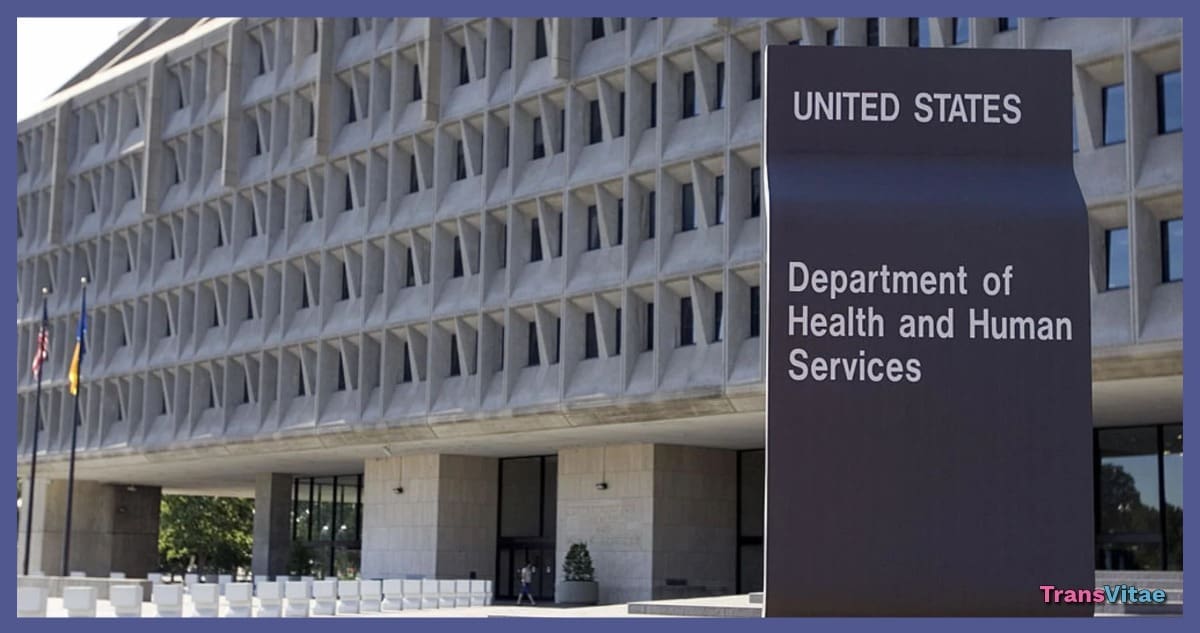
The Trump administration’s Department of Health and Human Services released a federally commissioned study Wednesday claiming an association between support for transgender-affirming practices, left-wing authoritarianism, and the justification of political violence.
The headline is explosive. The research underneath it is considerably more complicated.
The study, Where the Clinic Meets the Movement: Does Gender Ideology Arm Left-Wing Authoritarian Psychology?, surveyed 1,208 U.S. adults. Researchers were affiliated with Rutgers University, the conservative Manhattan Institute, and the Network Contagion Research Institute.
Researchers created a five-question Clinical Gender Affirmation Scale, or CGAS, using positions derived from guidance published by organizations including the American Psychological Association, American Psychiatric Association, World Professional Association for Transgender Health, and American Academy of Pediatrics.
In other words, the study’s measure of what it repeatedly calls “gender ideology” was constructed from positions of major medical and professional organizations.
Researchers found correlations between higher CGAS scores and what they classified as left-wing authoritarianism. They also found associations between CGAS scores and respondents saying political violence could sometimes be justified.
Those associations were statistically significant, but they were not measurements of actual violence. CGAS correlations with justification for violence ranged from 0.23 to 0.35, weaker than the correlations researchers found for their measure of left-wing authoritarianism, which ranged from 0.47 to 0.54.
Participants were instead asked about hypothetical or described scenarios involving killing Charlie Kirk, Donald Trump, or UnitedHealthcare CEO Brian Thompson; setting fire to ICE buildings; damaging wealthy people’s property; and violence against police.
HHS explicitly acknowledges the distinction.
“The study also did not measure whether respondents committed or intended to commit political violence,” the agency said. Instead, it measured whether respondents considered those acts justified. HHS further acknowledges that the research establishes associations, “not violent behavior.”
There is another important limitation: the study cannot establish which direction any relationship runs, or whether another variable explains it.
The report itself states that its cross-sectional design permits “no conclusions about the direction of effects.” Researchers acknowledge that endorsement of transgender-affirming positions could influence authoritarian attitudes, authoritarian personalities could be attracted to those positions, or an unidentified third factor could influence both. Experimental research would be required to establish causation.
That makes headlines suggesting researchers discovered a straightforward connection between “transgender ideology” and violence particularly misleading.
The sample itself was also overwhelmingly not transgender. Just 1.1% of participants identified as transgender or gender nonconforming. The study therefore cannot reasonably be interpreted as evidence that transgender people themselves are more prone to violence.
Yet transgender people are likely to become the political characters in a story that, according to the government’s own methodology, primarily measured the beliefs of cisgender Americans.
The study may raise questions worthy of additional research about political extremism and authoritarianism. But it does not demonstrate that supporting transgender people causes violence, that gender-affirming healthcare radicalizes people or that transgender Americans are disproportionately violent.
Those are much bigger claims than the data can support, no matter how tempting the headline may be.
