


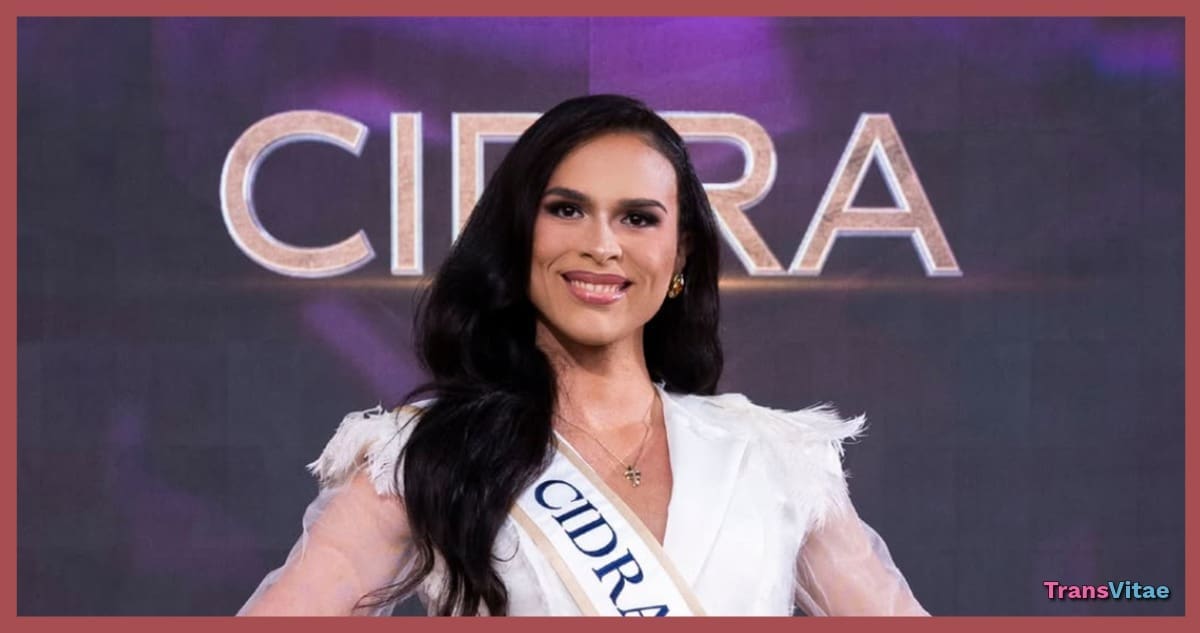
The announcement of a second openly transgender contestant in the Miss Universe Puerto Rico competition is being celebrated by LGBTQ+ advocates while also highlighting the persistent political and social resistance transgender women continue to face in public life.
Twenty-five-year-old Gabriel Rodríguez Velázquez will represent the municipality of Cidra in the 2026 Miss Universe Puerto Rico pageant, becoming just the second openly transgender woman to compete in the island’s national Miss Universe competition. Her participation follows the historic 2023 candidacy of Daniela Arroyo González, who became the first transgender contestant after the Miss Universe Organization opened competition to transgender women more than a decade ago.
For many supporters, Rodríguez Velázquez’s selection represents another step toward greater inclusion in one of the world’s most recognizable beauty pageant systems. But almost immediately after her announcement, she became the target of online harassment and criticism from conservative political figures.
Among the most vocal critics was Puerto Rico Senate President Thomas Rivera Schatz, who described the inclusion of transgender women in the pageant as a “shame and disgrace” in a Facebook post and urged the Puerto Rican government to withdraw any public support for the competition. His comments were quickly amplified by anti-transgender activists on social media, fueling a wave of hostile messages directed at Rodríguez Velázquez.
Despite the backlash, Rodríguez Velázquez has continued promoting her campaign publicly. A multidisciplinary artist and aspiring actress, she has said she hopes her participation will represent not only herself but transgender women seeking dignity, equality, and respect. According to her Miss Universe Puerto Rico profile, she also has a background as a competitive table tennis athlete and sees the pageant as another platform for advocacy.
The controversy underscores a broader cultural divide surrounding transgender inclusion in women’s spaces, even in organizations that have long since adopted inclusive policies. The Miss Universe Organization has permitted transgender women to compete since 2012, with the rule taking effect during the 2013 competition cycle. Since then, several transgender contestants have represented their countries on the international stage, including Spain’s Ángela Ponce in 2018, the first openly transgender woman to compete at Miss Universe.
Puerto Rico itself has become an increasingly prominent location within the Miss Universe franchise. The island is scheduled to host the international Miss Universe competition later this year, placing additional attention on its national pageant and its contestants.
For transgender advocates, Rodríguez Velázquez’s candidacy is about far more than pageantry. It reflects the ongoing struggle for visibility and acceptance in public life, where representation often brings both opportunity and heightened scrutiny.
As transgender participation becomes more common across entertainment, athletics, and public service, supporters argue that inclusion should no longer be treated as controversy but as evidence of a society that recognizes talent and ambition regardless of gender history. Whether Rodríguez Velázquez ultimately wins the crown or not, her participation has already become another milestone in Puerto Rico’s evolving conversation about transgender equality.
