


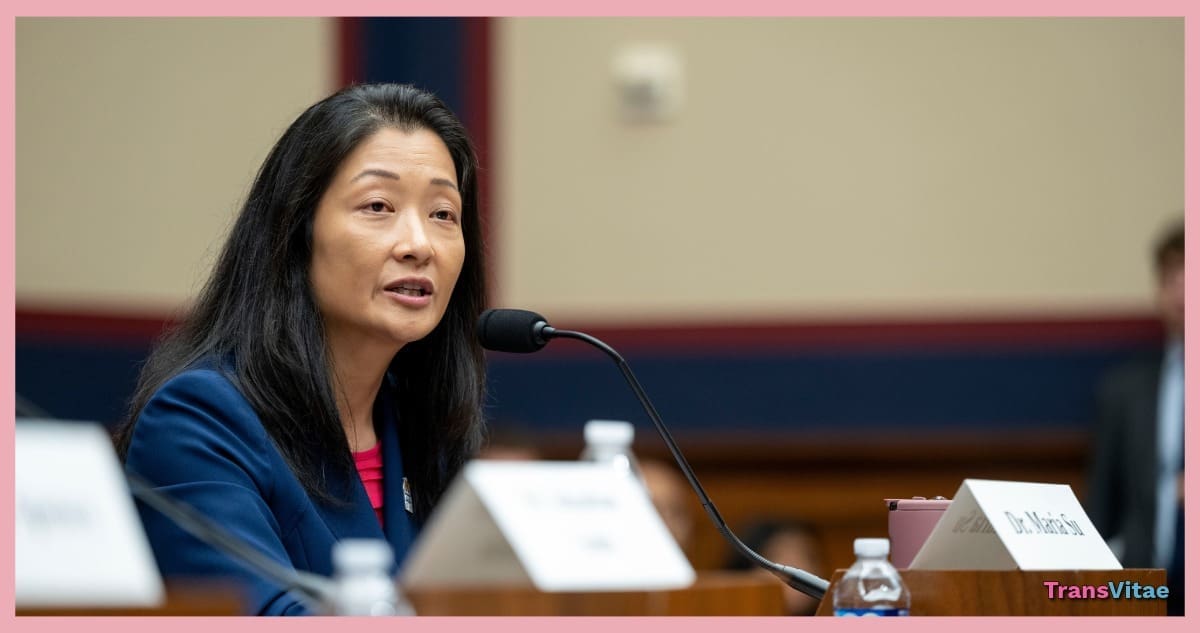
San Francisco Unified School District Superintendent Dr. Maria Su defended her district’s transgender-inclusive policies before Congress this week, pushing back against accusations from Republican lawmakers that schools are undermining parental rights and promoting what critics call “gender ideology.”
The hearing before the U.S. House Committee on Education and the Workforce brought together leaders from three large school districts: San Francisco Unified School District (SFUSD), Chicago Public Schools (CPS), and Virginia’s Loudoun County Public Schools. Republican committee members focused heavily on policies involving transgender students, parental notification requirements, bathroom access, pronoun usage, and diversity initiatives.
Su appeared alongside CPS CEO Macquline King and Loudoun County Superintendent Aaron Spence during a contentious hearing titled “Breaking Trust: Attacks on Parental Rights, Inappropriate Content, and Legal Abuses in America’s Schools.” The districts have become targets of federal investigations and conservative advocacy groups that claim schools are withholding information about students’ gender identities from parents.
Throughout the hearing, Republican lawmakers repeatedly questioned Su about transgender student policies, restroom access, drag story events, and parental notification practices. According to multiple reports, lawmakers framed the discussion around concerns that schools are prioritizing student privacy over parental involvement.
Su defended SFUSD’s approach, arguing that the district’s responsibility is to provide a safe and supportive learning environment for all students while complying with California law. She emphasized that schools serve diverse student populations and must balance parental engagement with student safety and privacy considerations.
The hearing comes amid escalating federal scrutiny of transgender-inclusive policies in schools. Since returning to office, the Trump administration has reversed several federal protections for transgender students and launched investigations into districts that maintain policies allowing students to use names, pronouns, and facilities that align with their gender identity.
Democratic lawmakers countered that the hearing reflected a broader political effort to turn transgender students into a national culture war issue. Several members argued that Congress should instead focus on challenges such as school funding, student mental health, teacher shortages, and academic achievement.
Outside the hearing room, more than 100 House Democrats signed a letter urging Congress to strengthen protections for transgender, nonbinary, and gender-diverse students, highlighting concerns that ongoing investigations and legislative attacks could make schools less safe for LGBTQ+ youth.
For transgender students and their families, the hearing underscored a growing national divide. While states such as California continue to support policies designed to protect student privacy and gender identity, federal officials and Republican lawmakers are increasingly challenging those protections. As the political battle intensifies, school districts like SFUSD remain on the front lines of a debate that shows no signs of ending anytime soon.
