


Every year, like clockwork, the complaints begin before June even arrives.
“Why do they get a whole month?”
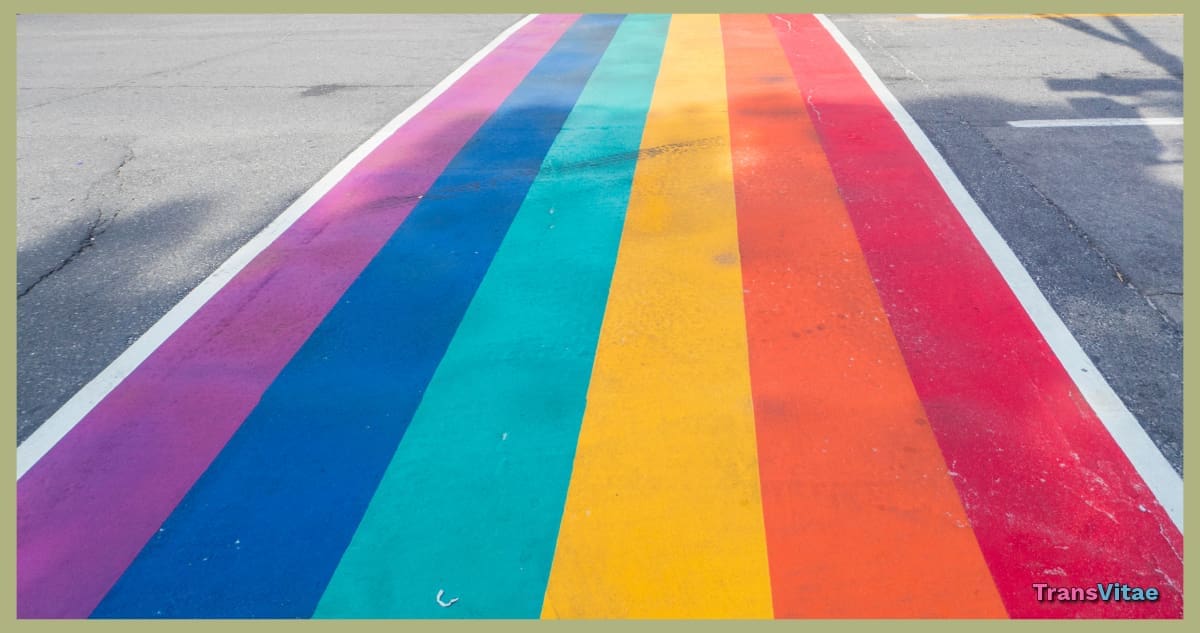
“Why is everything rainbow-colored?”
“Why do companies suddenly care?”
“Why do trans people have to make everything about identity?”
And every year, the same misunderstanding sits underneath all of it: the belief that LGBTQ+ pride, especially transgender pride, is somehow an attack on everyone else.
It isn’t. It never has been.
Pride Month was not created to make straight or cisgender people feel small. It was not invented to erase anyone’s traditions, values, religion, or identity. It was not designed to replace anyone else’s holidays or celebrations. It exists because for generations, LGBTQ+ people were told that the safest way to survive was to disappear.
Pride is what happens after decades of being told to stay quiet.
In 2026, that reality matters more than ever.
Because while anti-transgender rhetoric has become louder, more coordinated, and more politically profitable, the actual meaning of Pride Month has not changed. Pride is still about visibility. It is still about survival. It is still about community. And for many transgender people, it is still one of the only times each year when simply existing in public feels remotely safe.
The people who complain about Pride often frame it as excess. Too visible. Too political. Too loud. But visibility only feels excessive to people who have always been allowed to exist without explanation.
Most cisgender and heterosexual people never have to defend why they hold their partner’s hand in public. They never have to justify why they want accurate identification documents. They never have to explain their existence to lawmakers, employers, school boards, or strangers online.
Transgender people do. Constantly. That difference is the entire reason Pride exists.
Pride Began as Resistance, Not Marketing
One of the strangest modern criticisms of Pride Month is the idea that it is merely a corporate holiday. Rainbow logos appear every June, and critics point to them as evidence that Pride is shallow or performative.
Sometimes they are right. Plenty of corporations treat Pride as seasonal branding. Many will happily sell rainbow merchandise while donating to politicians who support anti-LGBTQ+ legislation. Communities have become increasingly critical of that hypocrisy, too.
But corporate involvement does not erase Pride’s origins.
Pride began because LGBTQ+ people were criminalized, harassed, assaulted, arrested, and publicly humiliated for existing openly. The modern Pride movement traces its roots to the 1969 Stonewall uprising in New York City, when queer and transgender people pushed back against repeated police raids and abuse at the Stonewall Inn.
It was not a parade designed by advertisers. It was resistance born from exhaustion.
Transgender women, drag performers, queer youth, homeless LGBTQ+ people, and marginalized communities were at the center of that resistance because they were often the most vulnerable and the most targeted.
That history matters because many of the same arguments used against transgender people in 2026 are recycled versions of arguments used against gay people decades earlier.
People once claimed gay visibility threatened children.
People once claimed same-sex marriage would destroy families.
People once claimed LGBTQ+ people were demanding “special rights.”
Now those same talking points have simply shifted toward transgender people. The target changes. The structure stays the same.
Visibility Feels Threatening Only When You Are Used to Dominating the Conversation
A common anti-trans argument during Pride Month is that LGBTQ+ people are “forcing” their identities onto others. But existing publicly is not force.
Seeing a transgender person in an advertisement is not oppression.
Seeing a Pride flag at a business is not discrimination.
Seeing LGBTQ+ people represented in media is not an attack on your family.
It is representation. And representation only feels political when certain groups are not accustomed to sharing cultural space.
For decades, nearly every major movie romance was heterosexual. Nearly every sitcom family was cisgender and straight. Nearly every public institution assumed heterosexuality and traditional gender roles as the default.
That dominance felt “normal” because it was familiar. The moment other people become visible too, some interpret equality as loss. But inclusion is not replacement.
A transgender teenager finally seeing someone like themselves in media does not erase anyone else. A Pride celebration downtown does not prevent anyone from attending church, raising children, celebrating holidays, or living according to their beliefs.
Pride asks for coexistence, not surrender.
Pride Is Often Misunderstood Because Many People Never Had to Hide
One of the hardest things for many non-LGBTQ+ people to fully understand is the emotional exhaustion that comes from constant self-monitoring.
Many transgender people grow up carefully calculating every interaction.
How should I speak?
How should I dress?
Will this person react badly?
Is this bathroom safe?
Will this employer reject me?
Will my family still love me?
Will this stranger become violent?
Those calculations become survival instincts. That is why Pride can feel emotional in ways outsiders sometimes struggle to understand. For many people, it is not merely celebration. It is relief.
Relief from hiding.
Relief from isolation.
Relief from feeling alone.
A Pride parade may look loud and colorful from the outside, but underneath it is often something deeply human: people briefly experiencing freedom from shame.
The rainbow itself became powerful because shame was once treated as mandatory.
Transgender Pride in 2026 Exists in a Much Harsher Political Climate
This year’s Pride Month arrives during one of the most openly hostile political climates transgender Americans have faced in decades.
Across the country, transgender people have become central targets in political campaigns, school policies, media outrage cycles, and legislative battles. Discussions about healthcare, sports participation, education, bathrooms, identification documents, employment protections, military service, and even public visibility have increasingly centered around restricting transgender lives rather than understanding them.
Many anti-trans activists insist these efforts are about “protecting rights.” But rights are not protected by singling out minorities for exclusion.
A transgender person accessing healthcare does not remove healthcare from others.
A trans student existing openly does not endanger classmates.
A Pride flag in a classroom does not erase religion.
A trans adult using public space does not threaten democracy.
What has actually happened is that transgender people have become politically convenient symbols in a broader cultural fight.
Fear mobilizes voters.
Outrage generates engagement.
And transgender people, who make up a relatively small percentage of the population, are often treated as easy targets because many Americans still do not personally know someone who is openly trans.
That distance makes misinformation easier.
Pride disrupts that distance.
It reminds people that transgender individuals are not abstract political concepts. They are coworkers, veterans, parents, students, neighbors, artists, athletes, healthcare workers, and ordinary people trying to live their lives with dignity.
The “Keep It Private” Argument Was Never Neutral
Another common complaint during Pride Month is the idea that LGBTQ+ people should simply “keep it private.”
But historically, “keep it private” has rarely meant privacy. It usually meant invisibility.
Straight people discuss spouses, weddings, crushes, and families openly every day without being accused of pushing an agenda. Wedding photos sit on office desks. Couples post anniversary tributes online. Parents discuss their children constantly.
Nobody calls that indoctrination.
But when LGBTQ+ people do the same thing, some suddenly redefine ordinary existence as political activism.
That double standard is precisely why Pride remains important.
Because equality is not merely the right to exist quietly when nobody notices you. Equality is the ability to participate openly in society without fear.
Pride Does Not Require Your Participation
One of the oddest aspects of anti-Pride outrage is how optional Pride actually is.
You do not have to attend a parade.
You do not have to wear rainbow clothing.
You do not have to decorate your business.
You do not have to personally agree with every aspect of LGBTQ+ culture.
But other people still deserve the freedom to celebrate themselves openly.
A Pride event existing near you does not infringe on your rights any more than a religious festival, sports championship parade, or cultural heritage celebration does.
Living in a pluralistic society means other people will celebrate identities and experiences different from your own. That is not oppression. That is coexistence.
The Real Fear Behind Many Anti-Pride Reactions
For some people, the anger surrounding Pride is not really about parades or flags at all.
It is about cultural change.
The world looks different than it did twenty or thirty years ago. Younger generations speak more openly about gender identity, sexuality, mental health, and self-expression. Social norms continue evolving. Communities that once existed almost entirely underground are now visible.
That pace of change makes some people uncomfortable. But discomfort is not the same thing as harm.
Every major civil rights movement in modern history made portions of society uncomfortable. Racial integration did. Women entering male-dominated professions did. Marriage equality did.
Visibility changes culture because visibility changes familiarity. And familiarity often reduces fear.
Pride Is Not About Perfection
Pride is not flawless. LGBTQ+ communities are not perfect. Activists are not always correct. Corporations absolutely exploit the movement for profit. Online discourse sometimes becomes hostile or exhausting. Internal disagreements exist across every part of the community.
But imperfection does not invalidate the underlying principle. And the principle is simple:
People deserve the freedom to exist honestly without shame.
That is what Pride represents.
Not superiority.
Not domination.
Not revenge.
Not the removal of anyone else’s rights.
Just the belief that transgender people, gay people, bisexual people, queer people, and every other member of the LGBTQ+ community deserve the same humanity everyone else expects for themselves.
The Bottom Line
As Pride Month approaches in 2026, the outrage machine is already warming up again. There will be complaints about rainbow logos, pronouns, drag shows, schools, sports, flags, and visibility itself.
But underneath all the noise, Pride remains something remarkably simple. It is people refusing to apologize for existing. For transgender people especially, that matters right now.
Because when laws, media narratives, and political rhetoric increasingly frame your existence as controversial, dangerous, or inconvenient, openly loving yourself becomes an act of resilience.
And despite what critics claim every June, that resilience has never threatened anyone’s rights. It only threatens the expectation that LGBTQ+ people should remain silent to make everyone else comfortable.
