


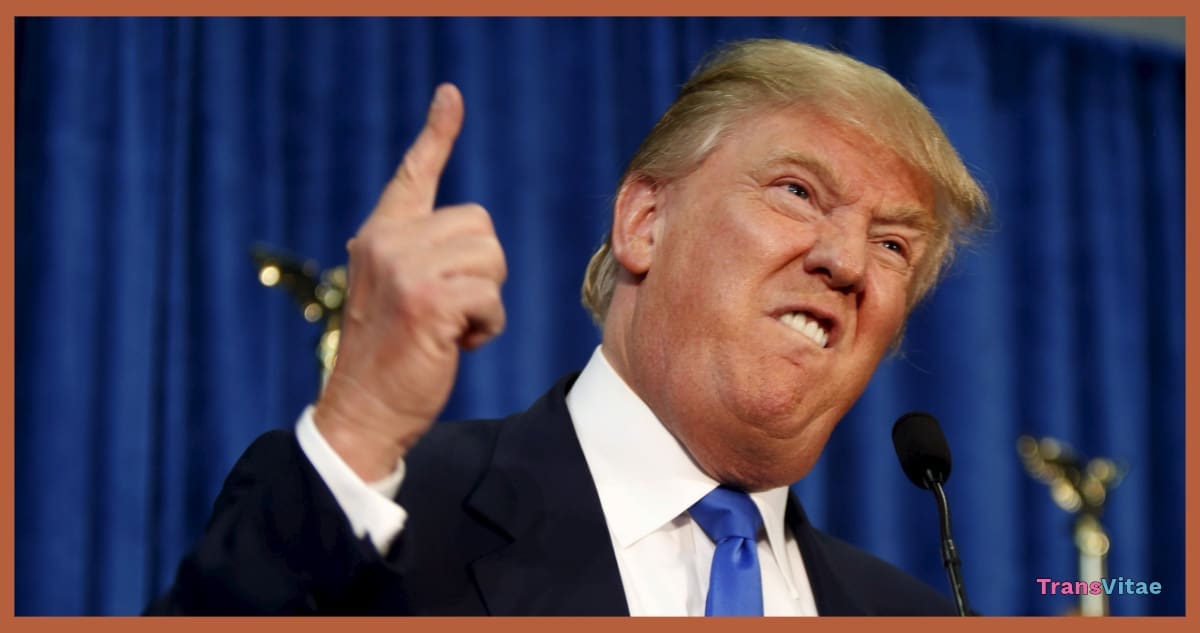
At a political rally in New York this week, President Donald Trump once again shifted a speech about politics and football into rhetoric targeting transgender athletes, despite the event having no connection to transgender sports participation.
The rally, held in support of Rep. Mike Lawler in Suffern, featured New York Giants quarterback Jaxson Dart introducing Trump to the crowd. During his remarks, Trump praised the young quarterback’s physical build before pivoting into comments about transgender women competing in sports. According to video clips and multiple reports from the event, Trump pointed to Dart’s size and strength as part of another argument against transgender participation in women’s athletics.
The moment quickly spread across social media, not because of football but because many viewers questioned why transgender people were once again brought into a speech that had nothing to do with gender identity or sports policy.
Trump has repeatedly centered transgender athletes in campaign speeches, rallies, and executive actions throughout his second administration. Earlier this year, he signed executive orders restricting transgender participation in women’s sports and directing federal agencies to aggressively enforce those policies.
Critics argue the repeated focus reflects a broader political strategy that uses transgender people as a cultural wedge issue, even in spaces where the topic is unrelated. Advocacy groups and media observers have noted that references to transgender athletes often appear during speeches about education, the economy, entertainment, or professional sports, helping keep the issue in public conversation regardless of context.
The rally also created headlines inside NFL circles. Giants linebacker Abdul Carter publicly reacted online after seeing clips of Dart introducing Trump, initially posting disbelief that the footage was real before later clarifying the two had spoken privately and resolved the matter.
Meanwhile, online reactions focused heavily on Trump’s decision to steer the conversation back toward transgender athletes during an appearance centered on football and Republican campaigning. Supporters applauded the remarks, while critics described the comments as another example of transgender Americans being turned into a political talking point regardless of the setting.
The moment comes amid a broader national climate where transgender participation in sports continues to dominate political messaging despite the relatively small number of transgender athletes competing nationwide. Even organizations that complied with recent federal policy changes have acknowledged the population affected remains extremely limited.
