


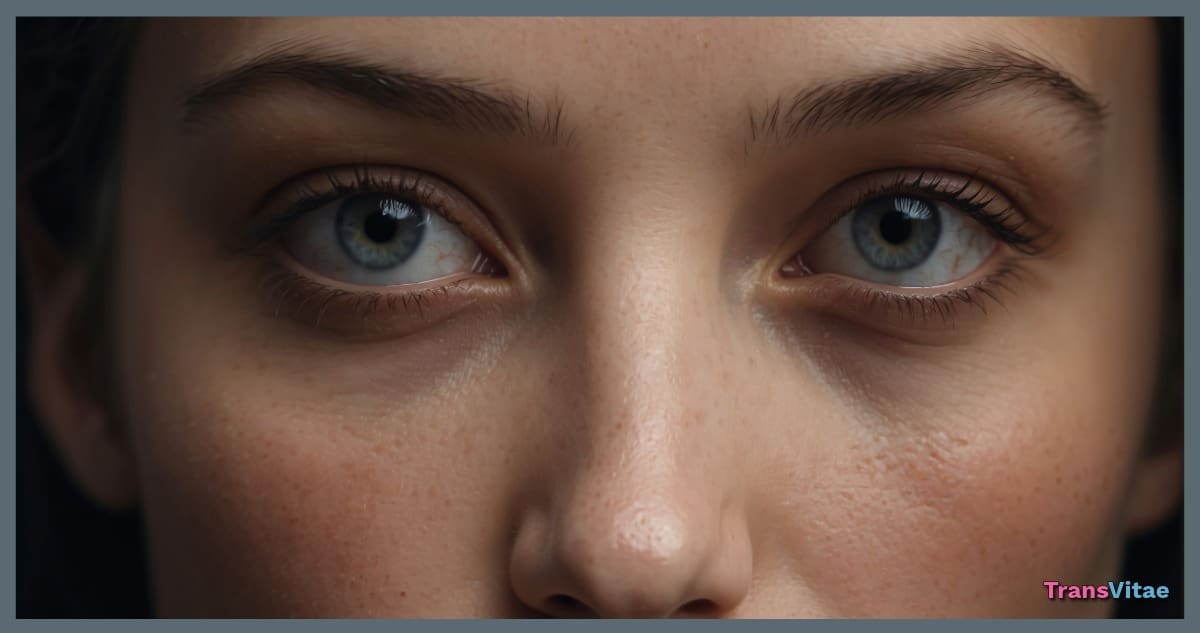
Lack of sleep has a way of showing up loudly on the face, especially around the eyes. Dark circles deepen. Puffiness sets in. Fine lines suddenly feel more visible. And the instinctive reaction for many people, including a lot of trans women, is to reach for more makeup. More concealer. More powder. More coverage.
That instinct is understandable, but it is also where things often go wrong.
When you are tired, piling on makeup usually does not make you look more awake. It makes you look heavier, drier, and older. For trans women on hormone therapy, and for anyone with mature or maturing skin, this effect can be amplified. Estrogen shifts skin texture. Sleep deprivation affects hydration. Combine those with over-applied makeup, and the result is often creasing, cakiness, and an emphasized tiredness you were trying to hide.
This article is about doing the opposite. Fewer products. Smarter placement. Understanding what actually makes eyes look rested and what quietly sabotages you when you are running on empty.
This is not about perfection. It is about looking like you slept more than you did.
Why Sleepless Eyes Are So Hard to Hide
Before talking about makeup, it helps to understand what lack of sleep actually does to the eye area.
When you are sleep deprived, several things happen at once:
- Blood vessels under the eyes become more visible, deepening purple or blue tones
- Fluid retention causes puffiness, especially in the lower lid and inner corner
- Skin becomes drier and thinner, which makes fine lines show more
- Facial muscles around the eyes relax downward, creating a heavier look
For trans women on estrogen, these effects can feel more pronounced. Estrogen often leads to softer skin and changes in fat distribution, which is wonderful, but it also means the under-eye area can show texture and dehydration faster. When you add powder-heavy makeup or thick concealers on top of that, everything gets magnified.
The goal is not to erase every sign of fatigue. The goal is to soften contrast and redirect light.
The Biggest Mistake: Trying to Cover Instead of Correct
One of the most common mistakes people make with tired eyes is assuming the solution is “more coverage.” It is not.
Dark circles are rarely just darkness. They are usually a mix of discoloration and shadow. When you apply thick concealer directly over them, especially one that is lighter than your skin tone, you often get a gray or ashy result that actually draws attention to the area.
Color correction exists for a reason. Used lightly, it allows you to use less concealer overall, which is the key to looking rested instead of overdone.
Color Correctors: Your Best Friend When You Are Exhausted
If you only change one thing in your routine, make it this.
Color corrector neutralizes darkness, so you do not need to layer concealer endlessly. The trick is choosing the right shade and using far less than you think.
Choosing the Right Corrector Shade
- Peach tones work best for light to medium skin tones with blue or purple circles
- Salmon or deeper peach works better for medium to deep skin tones
- Orange tones can work for very deep circles on deeper skin, but must be used sparingly
You are not trying to turn your under-eyes orange or peach. You are barely tinting the darkness so it stops showing through.
How to Apply Corrector Without Overdoing It
- Use a tiny amount, about the size of a grain of rice for both eyes
- Tap it only where darkness is strongest, usually the inner corner and hollow area
- Use a fingertip or small brush to press it in, not swipe
- Let it sit for a few seconds before adding anything on top
If you can still see the corrector clearly, you used too much. The best application looks almost invisible once blended.
Concealer: Less Product, Better Placement
Once the darkness is neutralized, concealer becomes a finishing step instead of a heavy-duty fix.
What to Look for in a Concealer When You Are Tired
- Lightweight texture that moves with the skin
- Slight luminosity rather than full matte
- A shade that matches your skin tone, not lighter
Brightening concealers can work, but only if the darkness underneath is already corrected. Otherwise they emphasize texture and shadows.
Smarter Placement for a Rested Look
Instead of coating the entire under-eye area:
- Place a small dot at the inner corner
- Add another at the outer corner if needed
- Blend upward and outward, lifting the eye visually
This placement lifts the face and avoids settling product into fine lines. The center of the under-eye usually needs the least product.
Light Reflectors: The Illusion of Sleep
Light-reflecting products are often misunderstood. They are not glittery highlighters. When used correctly, they subtly bounce light away from shadows and create the impression of smoother skin.
Where Light Reflectors Actually Help
- Inner corner of the eye
- Top of the cheekbone just below the outer corner
- Very lightly under the arch of the brow
These areas create an optical lift that makes the eyes look more open and alert.
Avoid placing reflective products directly on deep creases or bags. Light catches texture just as easily as it catches glow.
Hydration Layers Matter More Than Coverage
When you are tired, your skin is usually dehydrated, even if it does not feel dry. Makeup applied to dehydrated skin will crease, crack, and cling.
Hydration is not about slathering on heavy creams. It is about layering smartly.
A Simple Pre-Makeup Hydration Routine
- Apply a lightweight hydrating eye gel or serum
- Let it absorb fully before makeup
- Follow with a thin eye cream if needed, pressed in gently
If your concealer slides around or creases immediately, your skincare has not absorbed enough yet.
This step is especially important for trans women on HRT, as hormonal shifts can make skin both softer and more prone to dehydration at the same time.
What to Skip When You Are Exhausted
Knowing what not to do is just as important as knowing what helps.
- Skip Heavy Baking Under the Eyes: Powder baking emphasizes fine lines and dryness, especially on tired skin. If you need powder at all, use the smallest amount possible and only where creasing occurs.
- Skip Thick Matte Concealers: Matte formulas flatten the under-eye area and make fatigue more obvious. They are designed for photography and long wear, not real life exhaustion.
- Skip Heavy Lower Lash Line Makeup: Dark liner or heavy shadow under the eyes drags the face down and makes puffiness more noticeable. When you are tired, the lower lash line should be soft or bare.
- Skip Over-Brightening: Applying concealer that is too light can make under-eyes look hollow and gray. Neutral and natural always looks more rested than stark brightness.
Puffiness: Makeup Can Help, But Prep Matters More
Makeup can disguise puffiness, but it cannot eliminate it. The best approach is reducing swelling before makeup even starts.
Quick Puff-Reducing Tricks
- Cool spoons or chilled eye tools
- Gentle tapping massage from inner to outer corner
- Caffeine-based eye products used sparingly
Once puffiness is reduced, makeup can smooth and lift instead of fighting swelling.
Avoid applying heavy products directly over bags. Keep coverage higher on the cheekbone and lighter directly under the eye.
The Role of Brows in Looking Awake
Brows frame the eyes more than most people realize. When you are tired, a small adjustment here can make a big difference.
- Slightly lifting the brow tail visually opens the eye
- Filling brows softly rather than heavily keeps the face light
- Avoid dragging brows downward at the outer edge
A lifted brow shape creates alertness without adding more eye makeup.
Mascara and Lashes: Keep It Light and Strategic
When exhausted, lashes should open the eye, not weigh it down.
- Focus mascara on the top lashes
- Concentrate product at the roots, not the tips
- Skip heavy lower lash mascara
If you wear false lashes, choose lighter, wispy styles rather than dense bands. Heavy lashes can emphasize drooping and tiredness.
Mature Skin and Hormone Therapy: Special Considerations
As skin matures or shifts under hormone therapy, elasticity and texture change. Makeup that worked before may suddenly stop working.
The biggest adjustment is embracing flexibility. Creams often outperform powders. Sheer layers outperform full coverage. Glow often looks younger than matte.
If your under-eye area feels like it changed “overnight,” it probably did. Hormones and sleep deprivation both accelerate visible changes, but they also reward gentler approaches.
A Five-Minute Routine for Truly Tired Days
On days when energy is nonexistent, this is enough:
- Hydrating eye product
- Tiny amount of peach corrector where needed
- Lightweight concealer at inner and outer corners
- Soft brow grooming
- Mascara on top lashes only
That is it. No baking. No heavy blending. No fighting your face.
The Bottom Line
The most important thing to remember is that makeup is about illusion, not elimination. Trying to erase every sign of fatigue almost always backfires. Softening contrast, adding light in the right places, and respecting your skin’s condition will always look more natural.
For trans women especially, there is often pressure to look flawless in order to be seen as valid, put together, or feminine enough. That pressure can lead to overcorrecting and overapplying. But confidence often comes from restraint.
You do not need more makeup when you are tired. You need smarter makeup.
And sometimes, the most affirming thing you can do is let your face look human, rested enough, and still entirely your own.
