


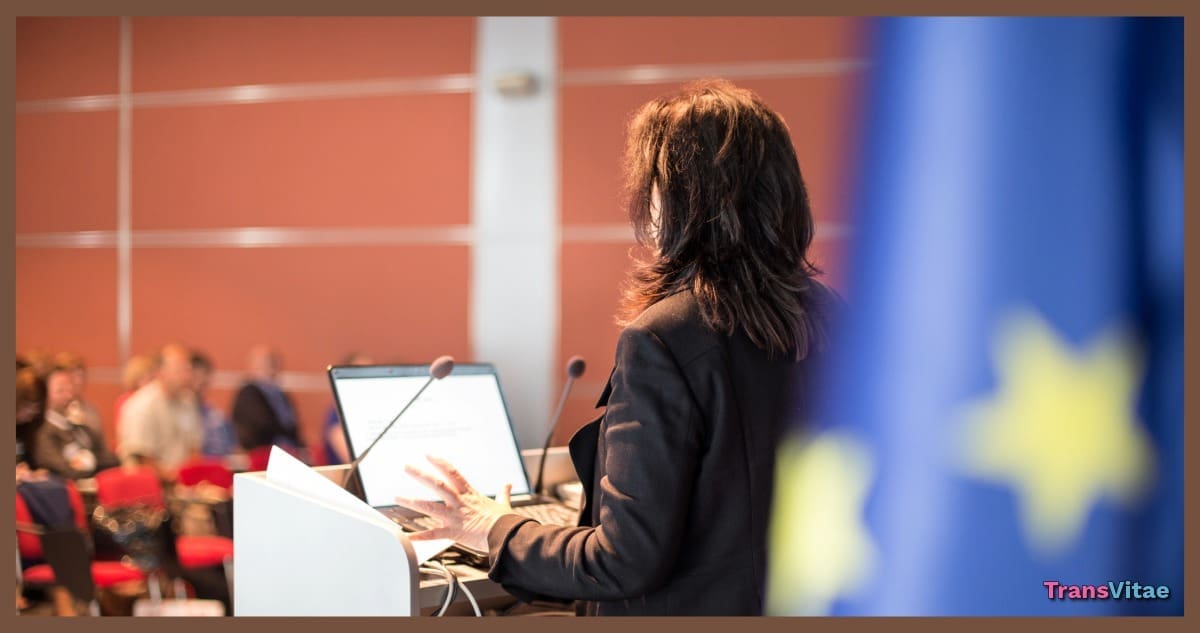
When a transgender person steps into a visible leadership role in government, it is never just about one job title. It is about who gets to be seen, who gets to speak, and who gets to shape the systems that affect everyday life. The creation of New York City’s LGBTQIA+ office, led by an openly transgender director, is not just a milestone for representation. It is a direct challenge to years of misinformation, fear-based rhetoric, and deliberate exclusion.
At a time when transgender people are being debated, legislated, and often misrepresented at every level of society, having trans leadership in public-facing roles does something powerful. It shifts the narrative from abstract talking points to lived reality.
Representation Is Not Symbolic. It Is Structural
There is a tendency, especially among critics, to dismiss representation as symbolic or performative. That argument falls apart the moment you look at how government actually works.
Public offices shape policy priorities. They determine funding allocations. They influence how services are delivered and who gets access to them. When transgender people are absent from these spaces, decisions about their lives are made without their input. That is not neutrality. That is exclusion.
A transgender leader in a public office brings something that cannot be replicated through secondhand understanding. They bring lived experience. They understand how policies land in real life, not just how they read on paper. That perspective changes outcomes.
For example, a policy around housing discrimination looks very different when someone in leadership understands how often trans people are denied leases, harassed by landlords, or forced into unsafe living situations. Healthcare policy shifts when decision-makers understand the barriers trans people face just trying to access basic care, let alone gender-affirming treatment.
This is not about identity politics. It is about competent governance.
Visibility Disrupts Misinformation
Let’s be real about the current climate. A large part of the anti-trans movement depends on one thing: distance.
Distance allows misinformation to thrive. It allows people to project fears onto a group they do not personally know. It allows narratives like “trans people are dangerous,” “trans people are deceptive,” or “trans people are a threat to society” to circulate without being challenged by real-world interactions.
When transgender people occupy visible, respected public roles, that distance starts to collapse.
A transgender agency head is not an abstract concept. She is a professional. A policymaker. A leader working within the same systems as everyone else. She attends meetings, manages teams, drafts policy, and engages with the public. That visibility forces a shift from fear-based caricatures to actual human understanding.
It is much harder to believe that trans people are “boogeymen” when you see them doing the same work as any other public servant.
Breaking the “Exception” Narrative
One of the more subtle forms of bias is the idea that successful trans people are exceptions rather than evidence. You have probably seen this framing before: “Well, that one is different” or “they’re not like the others.”
Public leadership roles help dismantle that narrative by normalizing trans presence in professional spaces. When transgender people are consistently visible in positions of responsibility, it becomes harder to treat their success as an anomaly.
Instead, it reframes the conversation. The question stops being “Can trans people do this?” and becomes “Why weren’t they given the opportunity before?”
That shift matters. It moves the conversation away from gatekeeping and toward access.
Policy That Reflects Reality
Policies created without community input often miss the mark. Sometimes they are ineffective. Sometimes they are actively harmful.
Transgender leadership helps close that gap.
Consider how many policies affecting trans people have historically been reactive rather than proactive. Bathroom laws, ID requirements, healthcare restrictions. These policies are often created in response to political pressure rather than real community needs.
When transgender people are part of the decision-making process, the focus changes. Instead of reacting to misinformation, policies can be built around actual issues. Housing stability. Employment discrimination. Mental health support. Access to healthcare. Public safety.
This is where representation becomes tangible. It is not just about who is at the table. It is about what gets discussed once they are there.
Trust Between Government and Community
Trust in institutions is already fragile for many marginalized communities. For transgender people, that distrust is often earned.
Many trans individuals have experienced discrimination in healthcare settings, hostility in public services, or outright denial of rights in legal systems. That history does not disappear overnight.
Having transgender leadership in public office can help rebuild that trust.
It signals that the system is not entirely closed off. That there are people within it who understand and are actively working to improve it. That engagement with government might lead to meaningful outcomes rather than further harm.
This is especially important for younger trans people and those who are just beginning to navigate their identity. Seeing someone like them in a position of authority can change how they view their own future and their relationship with the world around them.
Challenging the Fear Economy
There is an entire ecosystem built around fear of transgender people. Media personalities, political campaigns, and online influencers have turned anti-trans rhetoric into a business model. Outrage drives clicks. Fear drives engagement. And misinformation spreads fast when it is emotionally charged.
Public-facing transgender leaders disrupt that cycle.
They do so not through arguments alone, but through presence. Through competence. Through consistency. By showing up and doing the work, they undermine the narratives that rely on portraying trans people as unstable, dangerous, or unfit for public life.
It is harder to sustain fear when confronted with reality.
This does not mean backlash disappears. In many cases, visibility increases scrutiny. Trans leaders are often held to higher standards, subjected to more criticism, and targeted by bad-faith attacks.
But their presence still matters. Because every day they show up, they chip away at the foundation those fear-based narratives rely on.
The Double Burden of Visibility
It is important to acknowledge that visibility comes with a cost.
Transgender individuals in public roles often carry a double burden. They are expected to perform their job at a high level while also representing an entire community. Their actions are scrutinized not just as individuals, but as reflections of all trans people.
This pressure can be intense.
Mistakes that would be considered normal for others are sometimes amplified. Criticism can take on a personal or identity-based tone. And the expectation to be both perfect and representative is unrealistic.
Recognizing this does not diminish the importance of visibility. It adds context. It reminds us that representation is not a one-person solution. It requires broader structural support, community backing, and a willingness to allow trans leaders to be human.
Normalization Is a Long Game
Cultural change does not happen overnight. It happens through repeated exposure, consistent messaging, and gradual shifts in perception.
Public-facing roles are part of that process.
The more people see transgender individuals in leadership, the more it becomes part of the social landscape. It moves from “unusual” to “expected.” From “controversial” to “normal.”
This normalization has ripple effects.
It influences hiring practices in the private sector. It affects how educators approach gender in schools. It shapes how media outlets tell stories. It even impacts how families understand and support their own children.
Representation at the top filters down.
For the Community, It Is Personal
For transgender people, seeing someone like them in a position of authority is not just political. It is deeply personal.
It can mean the difference between feeling invisible and feeling seen. Between believing that success is possible and believing that doors are permanently closed.
It sends a message that their identity is not a barrier to leadership, intelligence, or impact. That they are not limited to surviving. They can thrive. They can lead.
That message matters more than most people realize.
For the Public, It Is Educational
For those outside the transgender community, public-facing trans leaders provide something equally important: education through exposure.
Not the kind of education that comes from debates or headlines, but the kind that comes from observation. Watching someone do their job. Seeing how they interact, lead, and contribute.
It humanizes a group that is often reduced to talking points.
It also creates opportunities for empathy. When people see transgender individuals as colleagues, leaders, and public servants, it becomes harder to maintain dehumanizing beliefs.
Moving Beyond Visibility to Impact
Representation is the starting point, not the end goal.
The true measure of progress lies in impact. Are policies improving? Are services becoming more accessible? Are outcomes for transgender people getting better?
Public-facing roles create the opportunity for change. What matters is how that opportunity is used.
Early signs from initiatives like New York City’s LGBTQIA+ office suggest a shift toward more coordinated, community-informed approaches. If that continues, it could serve as a model for other cities and states.
And that is where things get interesting.
Because once one major city demonstrates that inclusive leadership leads to better outcomes, it becomes harder for others to justify exclusion.
The Bigger Picture
This moment is part of a larger story about who gets to participate in public life.
Transgender people have always been part of society. What is changing is their visibility and their access to power. That shift is being met with resistance, but it is also creating new possibilities.
Public-facing roles are one piece of that puzzle. They are not a cure-all. They do not solve every issue. But they do something essential.
They make it harder to ignore reality.
They make it harder to reduce people to stereotypes.
And they make it clear that transgender individuals are not outsiders to society. They are part of it. They contribute to it. And they belong in the spaces where decisions are made.
The Bottom Line
The idea that transgender people are something to fear only works in the absence of visibility and understanding. Public leadership changes that equation.
It replaces fear with familiarity. Misinformation with lived experience. Distance with presence.
And in doing so, it does something quietly powerful. It reminds everyone watching that transgender people are not the story others have tried to tell about them.
They are the ones writing their own.
