


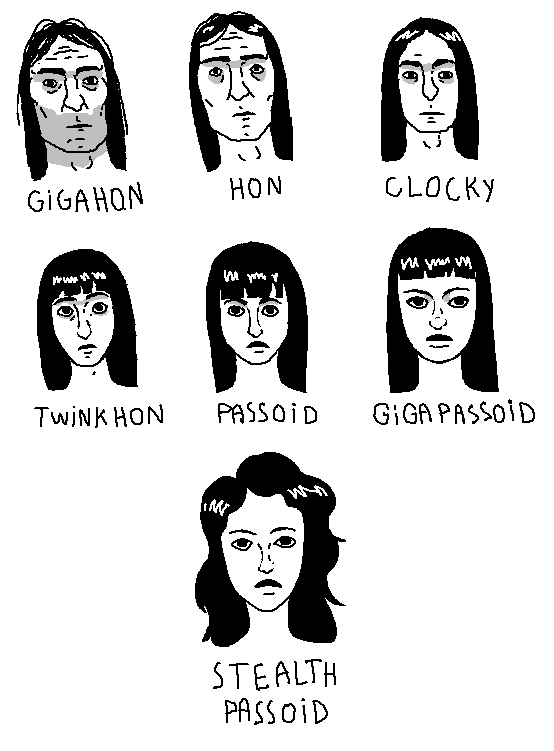
A viral meme circulating on Twitter is drawing backlash from transgender users after a graphic ranking trans women by perceived “passing ability” began spreading through a thread posted by the account known as “burgermoder.”
The image, styled like a simple black-and-white internet cartoon, presents a progression of illustrated faces labeled with slang terms pulled from online image boards and Reddit culture. The categories shown in the meme include “Gigahon,” “Hon,” “Clocky,” “Twinkhon,” “Passoid,” “Gigapassoid,” and “Stealth Passoid.”
The terminology originates largely from fringe internet communities, particularly forums where transgender people are frequently discussed through highly reductive or hostile language. In these spaces, words like “hon” are often used as insults directed at transgender women who critics believe do not pass as cisgender. “Clocky” is slang for someone whose transgender status is perceived as visible, while “passoid” is used to describe someone seen as successfully passing.
The meme arranges these labels in what resembles a hierarchy, implying a progression from those who are easily “clocked” to those who are considered indistinguishable from cisgender women.
While some users claimed the graphic was meant as satire of internet “passing discourse,” many transgender people on X criticized it for amplifying toxic language that originated in hostile online communities.
In replies and quote posts, several users argued that the chart reinforces the same appearance-based judgments that transgender people already face in everyday life. Others said the meme imports language directly from spaces like 4chan and incel-adjacent forums, where trans women are frequently mocked or dehumanized.
Some commenters described the chart as “terminally online brainrot,” while others said it reflects an unhealthy obsession with ranking people’s bodies and faces.
One user responding to the thread wrote that the graphic “turns transition into a scoreboard,” arguing that framing trans women as tiers of “passoids” and “hons” encourages competition rather than community support.
Critics also pointed out that the language used in the meme has historically been weaponized against transgender people online. Terms such as “gigahon” and “twinkhon” are commonly used in trolling communities to ridicule trans women based on perceived masculinity or body structure.
Even when shared ironically, advocates say repeating these labels can normalize them.
The controversy highlights how niche internet slang continues to spill into mainstream platforms. Linguists and internet culture researchers have long noted that memes originating on anonymous imageboards often spread outward through irony and remix culture, eventually reaching a much larger audience.
For many transgender users, the problem is not just the meme itself but what it represents.
Appearance-based hierarchies have long been a source of anxiety within transgender communities, particularly for people early in transition or those who do not meet narrow beauty standards.
As the graphic continues circulating, critics say it serves as another reminder that internet humor built around ranking bodies and identities rarely stays harmless for long.
