


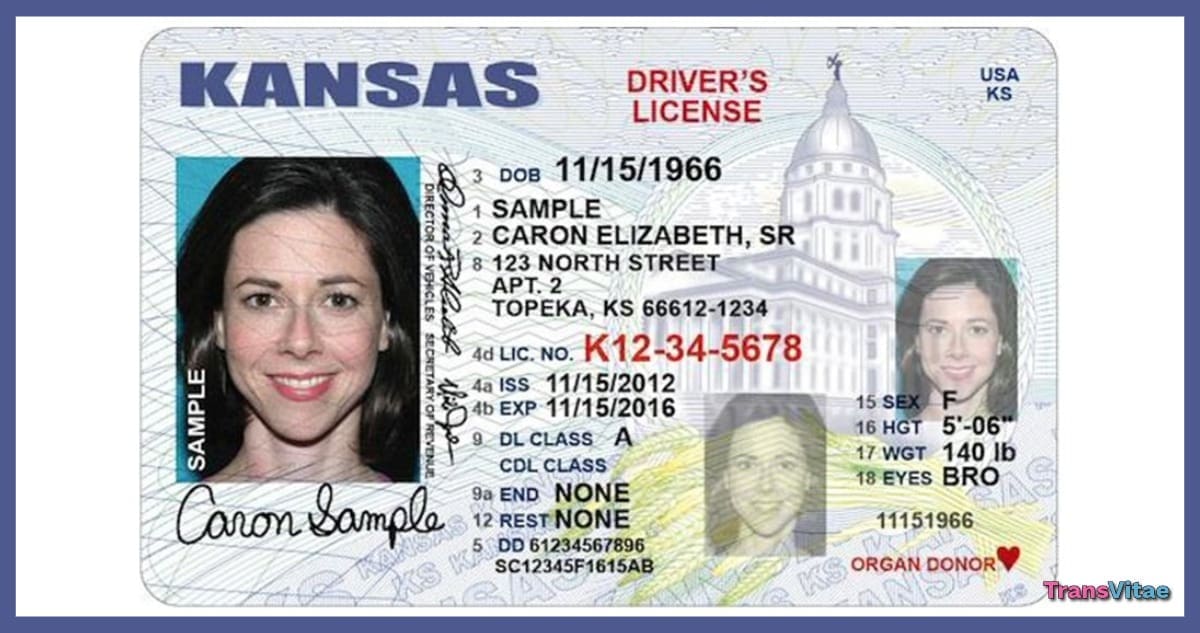
The Kansas Legislature has overridden Governor Laura Kelly’s veto of Senate Bill 244, and the most immediate impact for transgender residents is clear: there is no grace period.
The law, which requires government identification documents to reflect sex assigned at birth rather than gender identity, took effect upon the successful veto override. That means transgender Kansans who previously updated their driver’s licenses, birth certificates, or other state records are now out of compliance and must make changes immediately.
Unlike some regulatory shifts that allow weeks or months for administrative adjustments, Senate Bill 244 contains no delayed implementation window for affected residents. Legal observers note that this immediate enforcement creates urgency and confusion, particularly for people who updated their documents through lawful processes approved by the state in prior years.
State agencies are now required to ensure that identification documents align with the statute’s definition of sex. Transgender individuals who had already paid fees, completed paperwork, and secured updated records must once again navigate the system to obtain new documents reflecting their assigned sex at birth.
Advocates say the absence of a transition period places an immediate financial and logistical burden on thousands of residents. Fees for reissued driver’s licenses and certified documents can add up, and appointments at motor vehicle offices may already be backlogged. For individuals who rely on accurate identification for employment verification, housing applications, or travel, the abrupt shift adds another layer of stress.
Civil rights groups also warn of safety implications. Carrying identification that does not match one’s gender presentation can increase the risk of harassment during traffic stops, airport screenings, or routine identity checks. Without a grace period, residents do not have time to plan around upcoming travel, job onboarding, or other situations where identification is required.
Supporters of the measure argue that immediate enforcement was necessary to ensure consistency across state records and public policy. They have framed the law as restoring clarity in legal definitions of sex and say uniform implementation avoids administrative ambiguity.
Governor Kelly had previously cautioned that such legislation could invite legal challenges and create unintended consequences for Kansas residents. Advocacy organizations are now reviewing potential litigation strategies, particularly focusing on the abrupt enforcement timeline.
For transgender Kansans, the impact is not theoretical or months away. It is immediate. As agencies begin enforcing the new rules, residents who once believed their documents were settled must once again navigate a system that has changed overnight.
Whether the courts intervene remains to be seen. For now, the message from the state is clear: compliance is required now, not later.
