


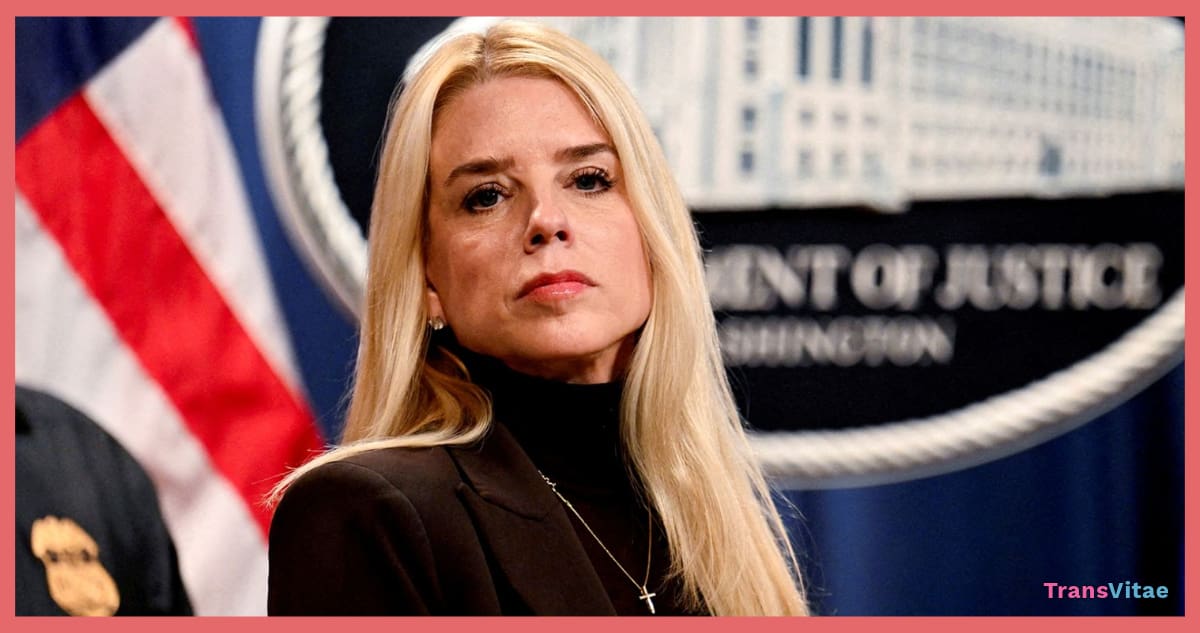
A December 4, 2025 memorandum from U.S. Attorney General Pam Bondi directing federal law enforcement to implement National Security Presidential Memorandum 7 has raised concerns among transgender advocates, who warn the guidance could increase scrutiny of transgender people and organizations engaged in lawful advocacy and protest.
The memo, sent to all federal prosecutors, law enforcement agencies, and Justice Department grant-making components, outlines a nationwide strategy for countering what it defines as domestic terrorism and organized political violence. While the document states it does not create new criminal law, it significantly broadens enforcement priorities under existing statutes.
Of particular concern is language in the memo that explicitly includes “radical gender ideology” among the ideological views it associates with domestic extremist threats. The memo places this phrase alongside references to anti-immigration views, anti-capitalism, and opposition to traditional views on family, religion, and morality when describing motivations federal investigators should consider.
Transgender legal advocates argue that this framing risks conflating transgender rights advocacy with violent extremism, even when no criminal conduct is present. Although the memo states that the federal government does not investigate individuals solely for First Amendment-protected activity, it also directs agencies to prioritize investigations where ideology is believed to motivate conduct that could be charged under a wide range of federal laws.
The guidance instructs federal prosecutors to pursue the “most serious, readily provable offenses” and lists dozens of statutes that may be applied in domestic terrorism investigations, including conspiracy, obstruction, racketeering, firearms offenses, and terrorism sentencing enhancements. Civil rights groups warn that this broad charging framework could disproportionately affect marginalized communities that are already frequent targets of political hostility.
The memo also orders the FBI, working through Joint Terrorism Task Forces, to compile lists of groups or entities believed to be engaged in conduct that may constitute domestic terrorism. While these lists are described as internal investigative tools, transgender advocates fear they could be used to justify surveillance or investigation of LGBTQ organizations, especially those involved in protests against restrictive laws.
Additional provisions expand public tip lines, authorize a cash reward system for information leading to arrests, and direct the review of prior intelligence files related to extremist activity over the past five years. Advocates caution that tip-based systems have historically led to false or malicious reports against transgender people, particularly during periods of heightened political rhetoric.
Justice Department officials have framed the memo as a necessary response to political violence and threats against public institutions. However, transgender advocacy groups say the guidance arrives amid an already hostile legal environment, marked by bans on gender-affirming care, public accommodations restrictions, and escalating threats against transgender individuals.
For many in the transgender community, the memo represents a troubling escalation in how national security language is being applied to social and political issues. As the DOJ moves from guidance to enforcement, advocacy organizations say they will closely monitor whether transgender people or organizations become targets based on ideology rather than criminal behavior.
