


A tragic shooting at the Dennis M. Lynch Arena in Pawtucket, Rhode Island, during a youth hockey event left two people dead, three injured, and ended with the shooter taking their own life. Law enforcement described the incident as domestic violence related. As is often the case in high-profile tragedies, the national conversation quickly moved beyond the crime itself and into broader political territory.
In the aftermath, Fox News host Lawrence Jones publicly suggested that transgender people should not be allowed to own firearms. That comment ignited renewed debate over whether gender identity should play any role in determining who can exercise Second Amendment rights.
This moment requires clarity. It also requires separating emotion from law and individual criminal behavior from constitutional rights.
This article does not excuse or defend acts of violence committed by anyone, including transgender individuals. Crime is crime. Accountability applies equally. The focus here is on whether stripping Second Amendment rights from an entire class of people is lawful, constitutional, or effective public policy.
What Happened and Why the Debate Escalated
Authorities reported that the shooter targeted family members in what investigators described as a domestic dispute that escalated into public violence. Domestic violence-related shootings remain one of the most common forms of gun homicide in the United States.
Rather than focusing solely on domestic violence prevention, some commentators pivoted to the shooter’s gender identity. This shift reframed the tragedy as part of a larger cultural debate rather than an individual act of violence.
When media figures propose restricting constitutional rights based on identity, that crosses from commentary into serious civil liberties territory.
The Second Amendment and Constitutional Protections
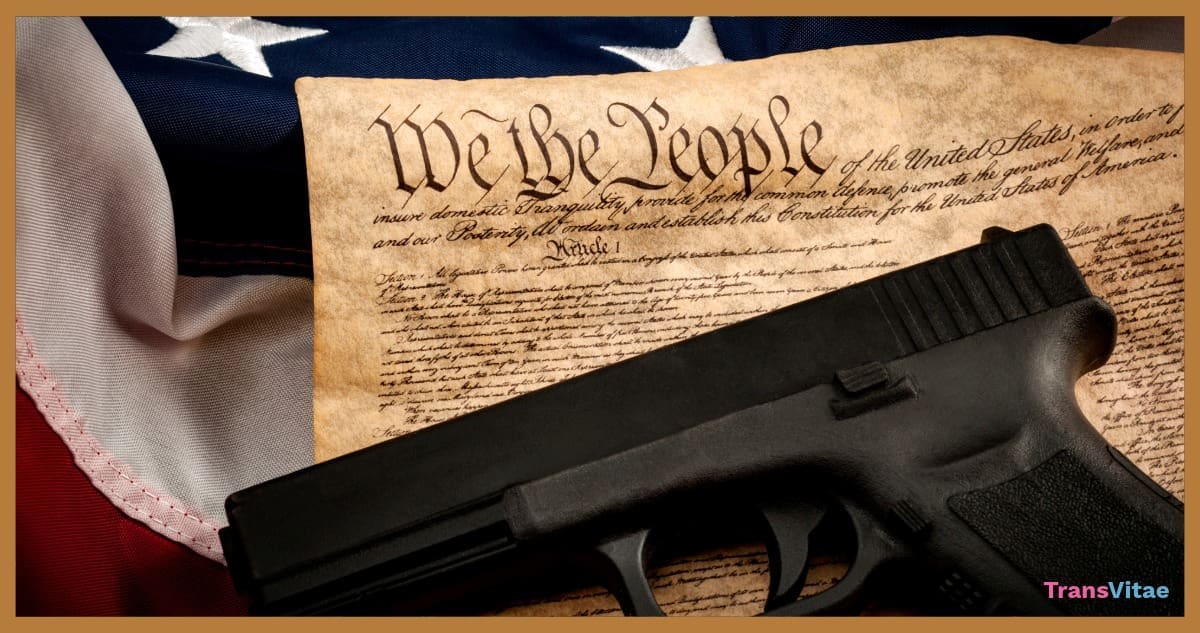
The Second Amendment protects “the right of the people to keep and bear Arms.” Supreme Court precedent affirms that this right belongs to individuals, though it is not unlimited.
Federal law already prohibits firearm possession for certain individuals. These include convicted felons, people subject to qualifying domestic violence restraining orders, individuals adjudicated mentally incompetent, and others barred under specific statutory criteria.
Notice the common theme. These restrictions are based on demonstrated behavior, criminal conviction, or legal adjudication. They are not based on race, religion, gender, or gender identity.
That distinction matters constitutionally.
Any law that singles out a group based on identity must pass heightened judicial scrutiny. Courts generally require a compelling governmental interest and a narrowly tailored approach. A blanket ban on firearm ownership for transgender Americans would almost certainly face serious constitutional challenges under both the Second Amendment and equal protection principles.
RELATED: The Second Amendment Debate and Transgender Americans
Identity Versus Behavior in Gun Policy
Gun violence prevention policies that survive judicial review tend to focus on risk indicators. These include violent criminal history, documented domestic abuse, or credible threats supported by evidence.
Policies that focus on identity rather than behavior are legally vulnerable and empirically weak.
There is no reliable national data showing that transgender people as a group are more likely to commit gun violence than the general population. In fact, transgender individuals statistically represent a very small percentage of overall violent offenders. Mass shooters, when examined as a category, overwhelmingly come from a variety of backgrounds and demographics.
When public debate centers on identity, it risks misdirecting policy energy away from the factors that actually correlate with violence.
Domestic Violence and Firearm Access
The Pawtucket shooting appears rooted in domestic violence. That is significant because domestic abuse remains one of the strongest predictors of lethal firearm incidents.
If the goal is public safety, research consistently shows that enforcing domestic violence firearm prohibitions, strengthening restraining order compliance, and improving background check systems are far more effective interventions than targeting identity groups.
Behavior-based policy is not only more constitutional. It is more likely to prevent harm.
Civil Rights Implications
Transgender Americans are already protected under various anti-discrimination frameworks in employment, housing, and public accommodations in many jurisdictions. Removing constitutional rights from a protected class based solely on identity would set a dangerous precedent.
Historically, civil rights erosion rarely stops with one group.
If identity becomes the threshold for revoking constitutional protections, the logic can expand. Religious minorities, political dissidents, or other unpopular groups could face similar arguments under future political pressure.
The Constitution does not protect only popular people. It protects citizens.
Mental Health Arguments and Misuse
Some proposals have attempted to tie gender dysphoria to existing mental health disqualifications for gun ownership. This approach is legally and medically flawed.
Federal firearm restrictions related to mental health apply only to individuals formally adjudicated as mentally incompetent or involuntarily committed through legal processes. A medical diagnosis alone does not trigger firearm prohibition.
Conflating transgender identity with dangerous mental instability not only stigmatizes people who are not violent, but it also misunderstands the law.
Again, crime prevention policy works best when grounded in specific risk behavior, not broad medical labels or identity categories.
Public Safety Without Collective Punishment
The United States faces a genuine gun violence problem. Acknowledging that does not require endorsing unconstitutional solutions.
Effective public safety strategies include improving crisis intervention systems, strengthening enforcement of existing domestic violence firearm bans, refining red flag procedures with due process protections, and expanding access to mental health services.
None of these require targeting transgender Americans as a group.
Collective punishment has no place in constitutional governance. Removing rights from millions because of the actions of one individual is neither legally sound nor morally consistent with American principles.
Accountability and Responsibility
It is also important to state clearly that being part of a marginalized community does not excuse criminal conduct. Transgender individuals who commit crimes should face the same legal consequences as anyone else.
Equal protection under the law cuts both ways. It means equal accountability as well as equal rights.
Rejecting collective blame does not mean minimizing harm. It means insisting that responsibility remain individual.
The Slippery Slope of Identity-Based Disarmament
If policymakers begin restricting firearm ownership based on identity categories, they invite constitutional chaos.
Would political affiliation become grounds for firearm prohibition? Would controversial medical conditions? Would membership in certain advocacy organizations?
Courts have historically rejected identity-based disarmament precisely because it conflicts with equal protection principles and Second Amendment jurisprudence.
The Bill of Rights does not operate on majority approval.
Data, Fear, and Policy
High-profile shootings often generate intense emotional reactions. That is human. But effective lawmaking requires data-driven analysis rather than reactive policymaking.
The overwhelming majority of transgender Americans are law-abiding. Many, like other Americans, own firearms for lawful purposes, including self-defense, hunting, sport shooting, or personal security.
Stripping rights from law-abiding individuals because of fear-driven narratives does not make communities safer. It may, however, deepen social division.
A Balanced Path Forward
A responsible path forward balances constitutional rights with legitimate public safety concerns.
- First, enforce existing domestic violence firearm restrictions aggressively and consistently.
- Second, ensure that background check systems function efficiently and accurately.
- Third, protect due process in any temporary firearm removal framework.
- Fourth, avoid identity-based policymaking that would likely fail constitutional review and further polarize the country.
Public safety and civil liberties are not mutually exclusive. The challenge is crafting policy that respects both.
The Bottom Line
The Rhode Island shooting was a tragedy. Two lives were lost, others were injured, and families were shattered. Nothing about constitutional analysis diminishes that harm.
But using one individual’s crime to justify removing Second Amendment rights from an entire identity group crosses a constitutional line. Gun rights debates are legitimate. Public safety debates are necessary. However, they must focus on behavior, risk, and due process rather than collective blame.
The Constitution protects individuals, not demographics. If rights can be revoked based on identity alone, then no group’s rights are secure.
Violence should be condemned without reservation. Civil liberties should be defended with equal clarity. That balance is not easy, but it is essential.
