


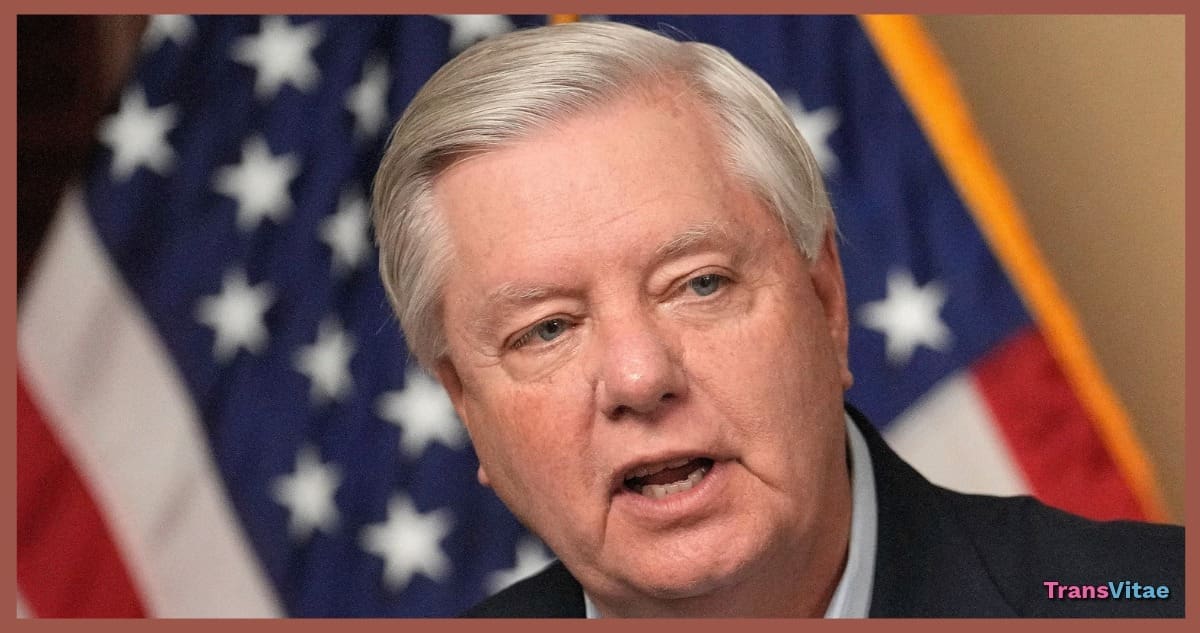
The death of longtime Republican Senator Lindsey Graham has reignited years of speculation about his private life after a viral social media post by transgender actress and author Jesse James Rose resurfaced online, drawing millions of views and sparking renewed debate over hypocrisy, privacy, and LGBTQ+ politics.
Graham, who died July 11 at the age of 71 following an aortic dissection, spent much of his political career opposing LGBTQ+ rights while remaining one of Washington’s most scrutinized lifelong bachelors. In the hours following news of his death, users across Instagram, X, and TikTok began sharing an older post by Jesse James Rose alleging that Graham had pursued intimate encounters with transgender women.

Rose, a transgender actress, model, and author, claimed she had heard similar stories from multiple transgender women over the years. While she did not present documentary evidence to support the allegations, her comments quickly spread across social media as users revisited longstanding rumors surrounding the South Carolina senator.
The allegations themselves are not new. For years, Graham has been the subject of unverified rumors about his sexuality and personal relationships, including the viral “#LadyGraham” hashtag that circulated widely in 2020. None of those claims have ever been substantiated, and Graham consistently declined to address speculation about his private life.
The renewed attention has divided LGBTQ+ communities online. Some activists argue that if public officials privately engage in relationships with transgender women while supporting legislation restricting transgender rights, those contradictions deserve public discussion. Others caution that amplifying unverified claims after someone’s death risks crossing ethical lines and reinforces the problematic practice of speculating about anyone’s sexual orientation or gender identity without evidence.
That distinction has become an important part of the conversation. LGBTQ+ advocacy organizations have long opposed “outing” individuals based on rumor alone, while also recognizing that accusations of hypocrisy carry different weight when elected officials actively champion policies affecting marginalized communities.
During his Senate career, Graham supported numerous conservative positions affecting transgender Americans, including restrictions on gender-affirming healthcare, opposition to transgender military service, and support for legislation limiting transgender participation in sports. Those policy positions have fueled much of the online reaction, with many critics arguing that the viral discussion reflects broader frustration with politicians perceived as targeting LGBTQ+ communities while allegedly living different private lives.
For now, Jesse James Rose’s allegations remain allegations. No independent evidence has emerged to verify the claims, and Graham never publicly acknowledged any relationship with transgender women. What is undeniable is that his death has reopened a conversation that extends beyond one politician, touching on privacy, political hypocrisy, and the complicated intersection of personal identity and public policy.
