


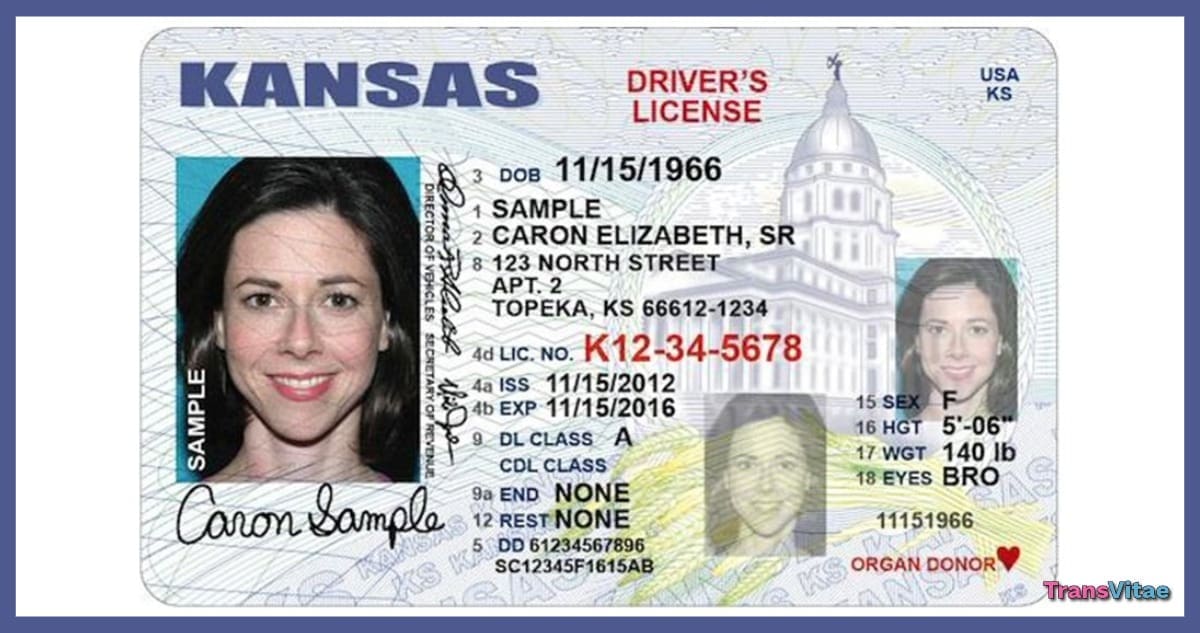
A Kansas transgender woman who complied with the state’s new driver’s license law still found herself facing a criminal charge, an incident that is drawing renewed attention to the practical consequences of legislation targeting transgender residents.
The case involving Kansas resident Kris Ripper has become one of the clearest examples yet of how laws designed to restrict legal recognition of transgender people can create unexpected problems once they are implemented.
Earlier this year, Kansas began enforcing Senate Bill 244, a law requiring driver’s licenses to display a person’s sex assigned at birth rather than their gender identity. The law also invalidated previously issued licenses that reflected updated gender markers, requiring affected transgender residents to surrender those licenses and obtain replacements.
Ripper did exactly that.
After exchanging her driver’s license for one that complied with the new state requirements, Ripper was stopped by law enforcement during a routine traffic stop. She later received notice that she had been charged with operating a vehicle without a valid license, despite carrying the state-issued license she had been required to obtain.
According to Transitics News, the county prosecutor dismissed the charge on June 23 after reviewing the case. Although Ripper will not face prosecution, the incident has become a case study in the unintended consequences of Kansas’ new identification policy.
The dismissal does not erase the broader questions raised by the case.
Kansas lawmakers argued that SB 244 would create consistency by requiring official documents to reflect what the law defines as biological sex. But the law also forced thousands of transgender Kansans to replace identification they had legally obtained years earlier, creating a transition period that has proven confusing for both residents and government agencies.
Civil rights advocates have warned that policies requiring transgender people to carry identification that does not match their lived gender increase the likelihood of confusion during routine interactions with employers, banks, airport security, and law enforcement. In Ripper’s case, those concerns became more than hypothetical when compliance with the law was followed by a criminal charge that prosecutors ultimately abandoned.
The incident also illustrates a broader challenge facing states that have enacted similar restrictions. Legislation is often debated in terms of political goals or legal definitions, but considerably less attention is paid to how those policies will function in everyday situations. Questions surrounding database updates, law enforcement training, license validity, and administrative procedures frequently emerge only after the laws take effect.
Kansas is one of several states that have recently restricted gender marker changes on driver’s licenses, but its decision to invalidate previously issued licenses has made the rollout particularly disruptive. Lawsuits challenging the measure remain ongoing, with plaintiffs arguing that the policy jeopardizes both the privacy and safety of transgender residents.
While Ripper’s charge has been dismissed, the episode underscores a larger reality: when legislatures enact complex identity laws without fully accounting for how they will be enforced, the consequences often fall first on the very people trying to follow the rules.
