


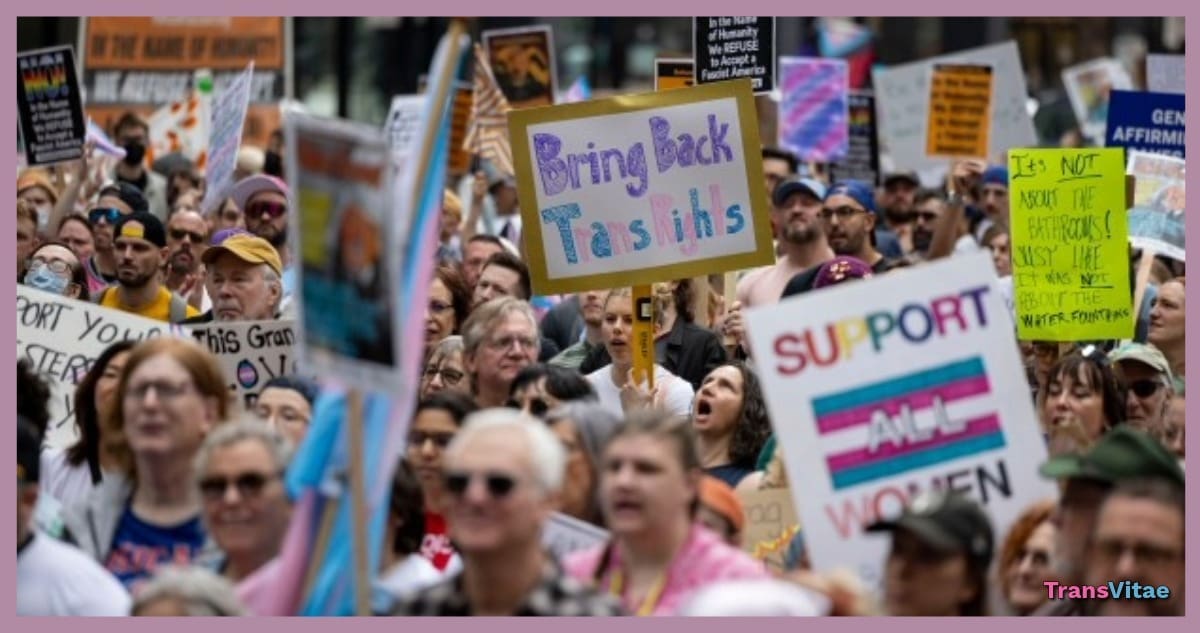
Chicago’s Transgender Day of Visibility events this year carried a clear message: visibility alone is no longer enough.
At a rally held in downtown Chicago, organizers, advocates, and community members gathered to celebrate transgender lives while calling for stronger legal protections, improved access to care, and sustained political action. The event, timed around the annual observance on March 31, reflected both pride and urgency amid a shifting national landscape for transgender rights.
Speakers emphasized that while visibility has historically played a critical role in advancing acceptance, the current moment requires more concrete outcomes. Advocates pointed to a surge in anti-LGBTQ+ legislation nationwide, with hundreds of bills introduced at the state level targeting transgender people in areas such as healthcare, education, and public life.
“Visibility is important, but it must translate into protection,” local leaders stressed throughout the rally, echoing a broader sentiment shared across Chicago’s advocacy community.
According to organizers, the rally aimed to center transgender voices while pushing policymakers to take action on issues affecting daily life. These include safeguarding access to gender-affirming healthcare, strengthening anti-discrimination protections, and addressing systemic violence, particularly against Black and Brown trans women, who face disproportionately high rates of harm.
Illinois is often considered a “safe haven” for transgender individuals due to its existing legal protections. However, advocates say gaps remain. Some healthcare providers have reportedly scaled back services out of fear of federal scrutiny, creating uncertainty for patients who rely on those resources.
Community leaders also highlighted the importance of proactive legislation. Efforts are underway in Illinois to advance measures that affirm LGBTQ+ identities and counter harmful narratives that frame gender diversity as a mental illness. Supporters argue that these policies are essential to protecting transgender people before restrictive laws gain traction elsewhere.
The rally itself was designed to be both celebratory and action-oriented. Families, activists, and allies gathered at Federal Plaza, where speakers encouraged attendees to stay engaged beyond the day’s events, through voting, advocacy, and community support initiatives.
Transgender Day of Visibility, first observed in 2009, was created to celebrate transgender lives and raise awareness of the challenges the community faces. Over time, it has evolved into both a celebration and a call to action, highlighting the need for systemic change alongside cultural recognition.
In Chicago, that evolution was on full display.
As one organizer noted, being seen is only the first step. The next, and more difficult, challenge is ensuring that visibility leads to safety, dignity, and lasting legal protection for transgender people across the city and beyond.
