


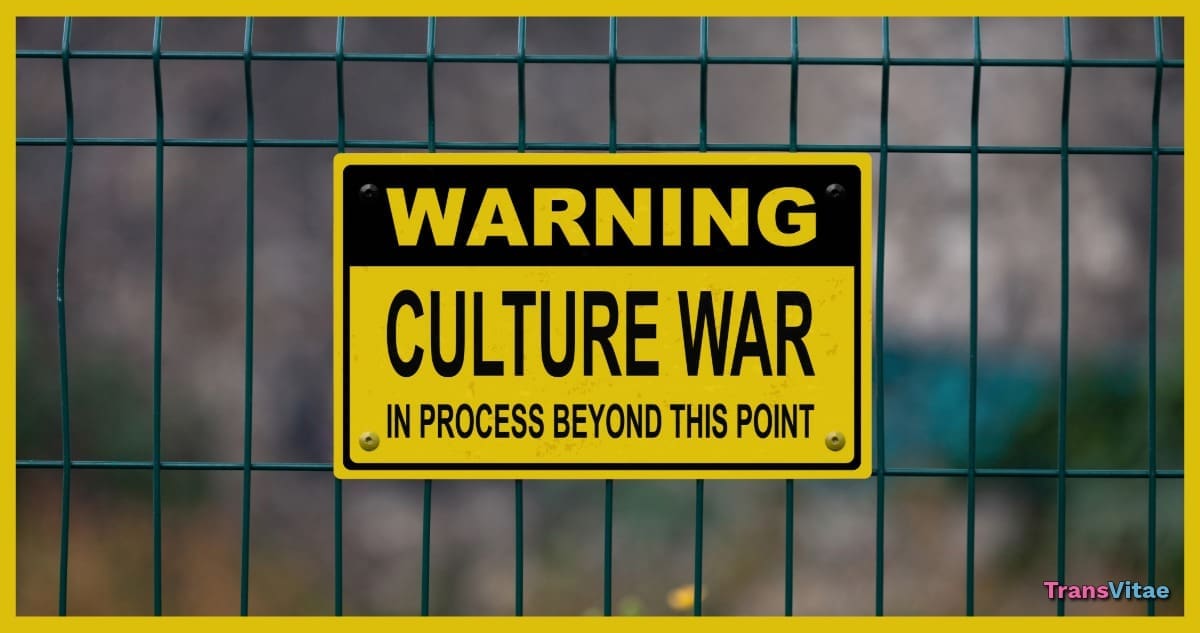
There is a strange thing happening in American life right now. Transgender people are being discussed constantly. Debated. Legislated. Analyzed. Framed as existential threats, moral questions, political leverage, and headline bait.
And yet, for all the noise, something basic keeps getting lost. We are not a culture war. We are your neighbors.
We are the person walking their dog at 6 a.m. We are the coworker who brings in coffee on Mondays. We are the aunt who shows up to birthday parties with loud wrapping paper. We are the quiet person at the gym trying to get through a workout without being stared at. We are the nurse who checks your blood pressure, the teacher who helps your child read, and the mechanic who keeps your car running.
The louder the political fight gets, the more distorted this reality becomes. So let’s bring it back down to ground level.
How We Became a Political Abstraction
If you consume enough media, you would think transgender people exist primarily in courtrooms, state legislatures, and cable news segments. You would think we are defined by sports debates, medical bans, and bathroom arguments.
This framing is not accidental. Political movements thrive on simplification. They reduce complex human lives into talking points because talking points are easier to rally around than real stories.
It is much easier to argue about “gender ideology” than to look at a person who lives down the street and realize they just want to feel safe buying groceries.
It is easier to say “this is about protecting children” than to confront the fact that many of the children being targeted are simply trying to survive adolescence with a little dignity.
When people become abstractions, empathy drops. When empathy drops, policy gets cruel. The culture war narrative depends on keeping us abstract. Humanization threatens that strategy.
The Everyday Reality No One Talks About
Most transgender people are not activists. Most are not influencers. Most are not trying to change society. Most are trying to pay rent, manage healthcare, maintain relationships, and maybe find a little peace in their own skin.
That is not a revolution. That is adulthood. The reality of trans life in 2026 is not dramatic television. It is routine.
Scheduling hormone appointments around work shifts. Navigating insurance paperwork. Deciding whether to correct someone who misgenders you or just let it go because you are tired. Figuring out which spaces feel safe and which ones require caution.
These decisions are mundane. They are repetitive. They are human. But when media narratives frame our existence as a cultural flashpoint, they erase the ordinariness that makes empathy possible. You cannot reduce someone to a slogan and still see them clearly.
The Manufactured Panic Machine
Let’s be honest about something. Transgender people did not create this so-called culture war. We are reacting to it.
Over the last several years, legislation targeting transgender healthcare, school participation, public accommodation, and even identity documentation has increased dramatically. Many of these bills are introduced even when they have little chance of passing. Their purpose is often symbolic. They generate headlines. They energize a base. They keep the topic alive.
The repetition is strategic. If you hear something framed as controversial often enough, your brain begins to associate it with instability, even if the underlying issue is simply someone living their life.
This is how moral panics work. They rely on volume, not accuracy. And moral panics need villains. Trans people have become convenient ones.
The Neighbor Test
Here is a simple exercise. Think of the transgender person you actually know.
Not the athlete on television. Not the hypothetical case in a debate clip. The real person. The coworker. The cousin. The barista. The neighbor. Are they trying to dismantle civilization? Or are they trying to make it to Friday?
The neighbor test cuts through ideology quickly. When someone is real and visible in your daily life, fear narratives become harder to maintain. It becomes difficult to believe that the person who helped shovel your driveway is secretly part of a social conspiracy.
That is why visibility matters. Not because it is flashy. Because it is grounding. We are not theoretical. We are local.
The Cost of Being Framed as a Threat
When a community is repeatedly framed as dangerous or unstable, the consequences are not abstract. They show up in hiring decisions. In housing discrimination. In medical refusals. In public harassment. In online threats that spill offline.
They show up in the mental health data that consistently indicates elevated anxiety and depression in transgender populations, often tied directly to discrimination and social hostility.
They show up in the way people feel compelled to justify their own existence in rooms where everyone else is simply assumed valid.
Being cast as a culture war issue means constantly being put on trial. No one thrives under permanent cross-examination.
Humanization With Teeth
Humanization does not mean softness. It does not mean silence. It does not mean pretending harm is not happening. It means refusing to accept dehumanizing narratives while still telling the truth.
It means saying clearly that transgender people exist across political parties, religions, income levels, races, and professions. We are not a monolith. We are not a coordinated movement. We are individuals navigating our own circumstances.
It also means calling out the strategy behind the framing.
When lawmakers introduce copy-and-paste bills across states, that is coordination. When pundits recycle the same alarmist language, that is strategy. When advocacy groups cherry-pick flawed research to reinforce fear, that is intentional.
Recognizing those patterns is not hysteria. It is media literacy. If someone wants to debate policy, fine. But do not confuse policy disagreement with permission to dehumanize.
The False Binary of Us Versus Them
Culture war rhetoric depends on division. It creates a binary where there are only two sides. If you support trans rights, you are radical. If you question the panic, you are complicit. If you exist as trans, you are political.
But most people live in more complicated spaces.
Many Americans have never had a detailed conversation about gender identity. They may feel uncertain. They may have questions. They may have been exposed to conflicting information.
Uncertainty is not hatred. The problem arises when uncertainty is exploited by media ecosystems that reward outrage.
We can have conversations about sports, medicine, and policy without stripping away humanity. That is the baseline. The moment someone’s basic dignity becomes negotiable, the conversation stops being productive.
What It Means to Be a Good Neighbor
Being a good neighbor is not ideological. It is practical. It means respecting names and pronouns even if you do not fully understand the science behind them. It means recognizing that someone else’s medical decisions are not your business. It means challenging dehumanizing jokes at the dinner table. It means voting with awareness of how policies affect real people in your community.
It also means trans people showing up in the same ways everyone else does. Coaching Little League. Volunteering. Supporting local businesses. Participating in civic life.
The culture war narrative collapses when ordinary interactions replace caricatures. It is hard to demonize someone who just helped your child with math homework.
The Role of Media Literacy
We are living in an era where algorithms amplify outrage. Stories that provoke fear spread faster than stories that encourage nuance.
If you see a headline claiming that trans people are destroying something, pause. Ask who benefits from that framing. Ask what data is being cited. Ask whether the story represents a widespread issue or a rare case elevated for political effect.
Critical thinking is not partisan. It is protective. The culture war thrives when audiences react before verifying. Neighbors thrive when they listen before judging.
The Long Game
The loudest moments in history are not always the most representative. There have been periods of intense backlash before. Civil rights movements have always faced resistance. That does not mean the people at the center of those debates were temporary.
Transgender people are not new. We have existed across cultures and centuries. What is new is the scale of visibility and the speed of media cycles.
Visibility invites scrutiny. Scrutiny invites backlash. Backlash often precedes normalization. That does not make the present moment easy. But it does provide context. We are not a passing phase in the news cycle. We are part of the fabric of the communities we live in.
The Bottom Line
Here is the truth that cuts through everything.
When the cameras turn off and the hearings adjourn, transgender people still wake up in the same houses. We still go to the same jobs. We still love our families. We still worry about the same things everyone else worries about.
We are not symbols. We are not ideological test cases. We are people with mortgages, pets, gym memberships, student loans, and favorite pizza places.
We are neighbors. And neighbors are not enemies unless someone insists on turning them into one.
The more we return to this simple reality, the less oxygen the culture war has. Because culture wars require distance. Proximity dissolves them.
So the next time you hear someone reduce trans people to a threat or a trend, remember the neighbor test. Look around. We are already here. And we are not going anywhere.
