


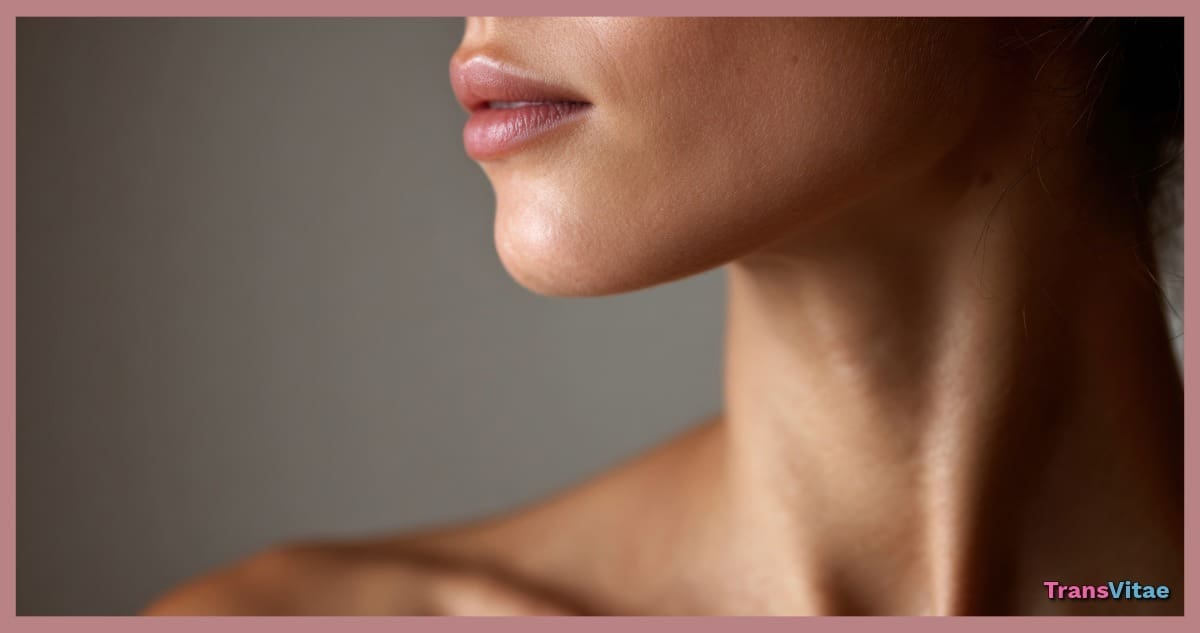
Scroll through beauty and grooming content long enough and the jawline will appear. Sharp angles. Deep shadows. Before-and-after photos that quietly suggest confidence, masculinity, femininity, or even safety lives somewhere between the ear and the chin. The message is rarely explicit, but it is constant. A defined jawline equals attractiveness. A softer one is something to fix.
This obsession did not emerge naturally. It is the product of algorithm-driven beauty culture, marketable insecurity, and rigid ideas about gender presentation. For transgender people in particular, jawline beauty standards often become shorthand for passing, legitimacy, and worth. Grooming advice stops being about care and starts feeling like a test you can fail.
The reality is far less dramatic and far more humane. Bone structure is not a virtue. It is anatomy. Treating it like a moral or aesthetic achievement distorts how people see themselves and each other, especially trans people already navigating hostile beauty expectations.
How the “Perfect Jawline” Became a Modern Beauty Obsession
Jawlines have always carried symbolic meaning, but their current dominance is relatively new. Western beauty culture has long favored sharp facial angles, tying them to power, desirability, and authority. Classical sculpture, old Hollywood lighting, and high-fashion photography all carved faces out of shadow. Those aesthetics were never neutral. They centered thinness, whiteness, and rigid gender norms.
Social media amplified these ideas and stripped them of context. Techniques once reserved for studio shoots became everyday content. Contour moved from subtle enhancement to illusion. Facial analysis videos reduced beauty to angles and ratios. The perfect jawline emerged as the easiest visual shorthand. It photographs well, creates instant contrast, and can be exaggerated with lighting, pose, and makeup.
This made it ideal for platforms that reward immediate visual impact. A sharp jawline reads as transformation, even when nothing about the face has actually changed. The illusion is framed as achievable and expected, especially for people already under pressure to be read a certain way.
What rarely gets acknowledged is how artificial these results are. Controlled lighting, static poses, and camera angles do not reflect how faces look in motion or in everyday life. When these images are consumed without context, natural facial variation starts to feel like failure.
Why Grooming Content Fixates on Angles and Shadows
Angles sell. Shadows create drama. Hard lines imply effort and discipline. Algorithms reward contrast, and few features offer it as easily as the jawline.
For creators, jawline content is efficient. Small changes produce big visual payoffs. A head tilt, downward lighting, and strategic shading can create the illusion of a completely different face. That illusion becomes a promise. Buy this product. Use this technique. Fix this feature.
The problem is not grooming or makeup itself. It is the implication that facial structure is something you should be able to control if you try hard enough. Genetics, fat distribution, age, and hormones shape faces far more than contour ever will. Grooming content rarely acknowledges this because it undermines the sale.
The result is a culture where softness is framed as laziness and sharpness as achievement. Faces stop being faces and start being scorecards.
Jawlines, Gender, and Grooming Expectations
Jawline obsession is deeply gendered. It simply shifts depending on who is being targeted.
For many transmasculine people, a strong jawline is framed as proof of masculinity. Content emphasizes width, squareness, and visible angles. Anything less is treated as a barrier to being read correctly. This turns grooming into a constant struggle against genetics, weight changes, or hormone timelines that are not fully under one’s control.
For transfeminine people, the pressure flips but does not ease. A strong jawline is framed as something to hide or correct. Tutorials promise to soften or blur angles, implying that bone structure determines womanhood. The same facial feature can be treated as a success or a failure depending entirely on gendered grooming expectations.
Nonbinary people are often erased from this conversation altogether or pressured to modulate their appearance depending on how they want to be read on a given day. The underlying message remains consistent. Your face must communicate gender clearly and correctly at all times.
This is not neutral grooming advice. It is social enforcement disguised as beauty guidance.
Passing Culture and the Pressure of Facial Structure
For many transgender people, passing is not about vanity. It is about safety, employment, and minimizing harassment. That reality makes appearance-based advice feel urgent rather than optional.
Jawline discourse exploits that vulnerability. It suggests that sharper angles or softer contours can reduce risk. When that promise fails, the blame quietly shifts back onto the individual. You did not try hard enough. You used the wrong technique. You bought the wrong product.
What gets ignored is how unreliable these signals actually are. Gender perception is contextual. People read it through voice, movement, clothing, and their own biases. No jawline guarantees safety. No amount of contour can override discrimination.
By centering bone structure, grooming culture pushes trans people into constant self-surveillance. Every mirror becomes an evaluation. Every photo becomes evidence. The face stops feeling like home and starts feeling like a performance under review.
The Industry Behind Jawline Beauty Standards
Jawline obsession is profitable. Products promising definition sell because they tap into insecurity. Contour kits, sculpting sticks, razors, facial tools, injectables, and surgical procedures all benefit from the narrative that structure equals beauty.
Even wellness-adjacent trends like facial massage or gua sha are often marketed with exaggerated claims about reshaping the face. While these practices can feel soothing or grounding, they are frequently sold as structural solutions rather than comfort rituals. When results do not materialize, users are encouraged to blame themselves rather than the marketing.
For trans consumers already navigating hormone changes, medical gatekeeping, and limited access to affirming care, this messaging can be especially predatory. It promises control in a world that often withholds it.
RELATED: Jawline Feminization Surgery: A Guide for Trans Women
What Actually Shapes a Face
Faces are not static. Hormones redistribute fat. Aging softens or sharpens features depending on genetics. Weight changes alter fullness. Stress, sleep, and hydration affect appearance temporarily. Lighting alone can dramatically change how a jawline reads.
None of these factors are moral. None of them are failures.
A jawline looks different at rest and in motion. It reads differently indoors than outdoors. It carries cultural meaning far beyond its physical reality. Understanding this does not mean abandoning grooming. It means grounding expectations in reality instead of fantasy.
Reclaiming Grooming as Care, Not Correction
Grooming can be grounding. It can be ritual, comfort, creativity, or play. It becomes harmful when it is framed as correction rather than choice.
For trans people, reclaiming grooming often starts with reframing the question. Instead of asking how to fix a jawline, the question becomes what makes you feel present in your body.
That might mean contouring because you enjoy the artistry. It might mean shaving because you like the sensation of smooth skin. It might mean doing nothing at all. Your face does not owe anyone clarity.
There is no ethical requirement to chase angles. Sharpness is not a virtue. Softness is not failure. Facial structure is not proof of legitimacy.
The Cost of a Single Ideal
When beauty culture fixates on one feature, it narrows the range of acceptable faces. This harms everyone, but it disproportionately impacts marginalized people. It reduces human variation to a checklist and declares most people lacking.
For trans communities, this narrowing is especially damaging. It reinforces the idea that acceptance must be earned through appearance. It distracts from systemic issues like healthcare access, legal protection, and safety by placing responsibility on individual bodies.
The myth of the perfect jawline is not just about aesthetics. It is about who gets to exist without explanation.
The Bottom Line
Bone structure is not a virtue. It does not measure discipline, authenticity, or worth. It is not a prerequisite for gender recognition or self-respect.
You are allowed to enjoy grooming without chasing an impossible standard. You are allowed to change your appearance and also to stop trying. You are allowed to exist with a face shaped by genetics, hormones, history, and time.
The jawline does not define you. The obsession with it says far more about the culture that created it than about the people living under its gaze.
And you do not owe that culture a sharper angle.
