


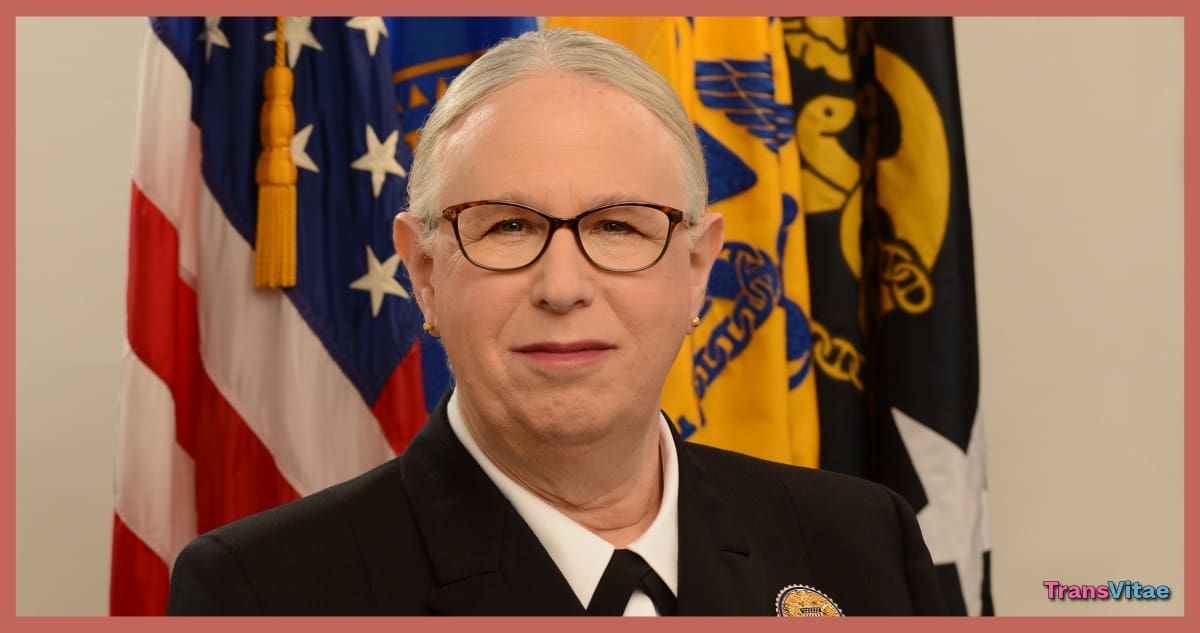
The Department of Health and Human Services confirmed this week that the official portrait of Admiral Rachel Levine, the former Assistant Secretary for Health, has been altered to display her previous name instead of her legally affirmed name. The decision, made under the Trump administration, has drawn sharp criticism from LGBTQ advocates and former federal officials who view it as an intentional act of disrespect toward a groundbreaking public servant.
Levine, a pediatrician and former Pennsylvania health secretary, became the first openly transgender federal official confirmed by the Senate in 2021. Her portrait has been displayed at HHS headquarters since her tenure as a four-star admiral leading the U.S. Public Health Service Commissioned Corps.
During the recent federal government shutdown, staff noticed that the nameplate beneath her portrait had been replaced with her deadname. HHS later acknowledged the change and stated that it was made to align internal displays with what the agency described as biological reality. The statement has been widely interpreted as a political message aimed at transgender Americans and one that echoes broader policy shifts the administration has introduced across federal agencies.
Former colleagues of Levine called the move unnecessary and petty. One former HHS official who served during the Biden administration described the alteration as an act of bigotry disguised as administrative housekeeping. Another staff member, speaking anonymously, said the change felt deliberately disrespectful and signaled a broader effort to roll back the visibility and legitimacy of transgender public officials.
Levine declined to offer a detailed response. She stated only that she would not comment on this type of petty action. Advocates have pointed out that deadnaming is often used to undermine the identity of transgender people and can carry significant emotional harm. Doing so on an official federal portrait, they argue, sends a message that the government is willing to disregard a person’s legal identity for political purposes.
The reaction across the transgender community has been swift. Many noted that Levine’s tenure in federal service was historic and highly visible. Her leadership during public health crises and her role in expanding access to gender-affirming care made her one of the most prominent transgender officials in U.S. history. Replacing her affirmed name on a federally displayed portrait is seen as both symbolic and intentional, an institutional attempt to erase recognition she earned.
Critics have also highlighted that changing a name on an official portrait is not a standard administrative procedure. Portraits of former officials traditionally maintain the names they held at the time of service, including officials who have legally changed their names for reasons unrelated to gender identity. Advocates argue that this inconsistency further underscores the political nature of the decision.
For many LGBTQ Americans, the change is not simply a bureaucratic update. It reflects a broader pattern emerging across federal agencies in which transgender people are being pushed out of visibility. Supporters of Levine have emphasized that her contributions remain unchanged and that no alteration to a plaque can reverse the historic significance of her service.
